Cordless Blower Review
RAXONE Electric Leaf Blower Cordless 800CFM Review: Specs and Pros
As an Amazon Associate, I earn from qualifying purchases at no extra cost to you.
⚡ Overview: A Budget 20V Blower That Promises a Lot
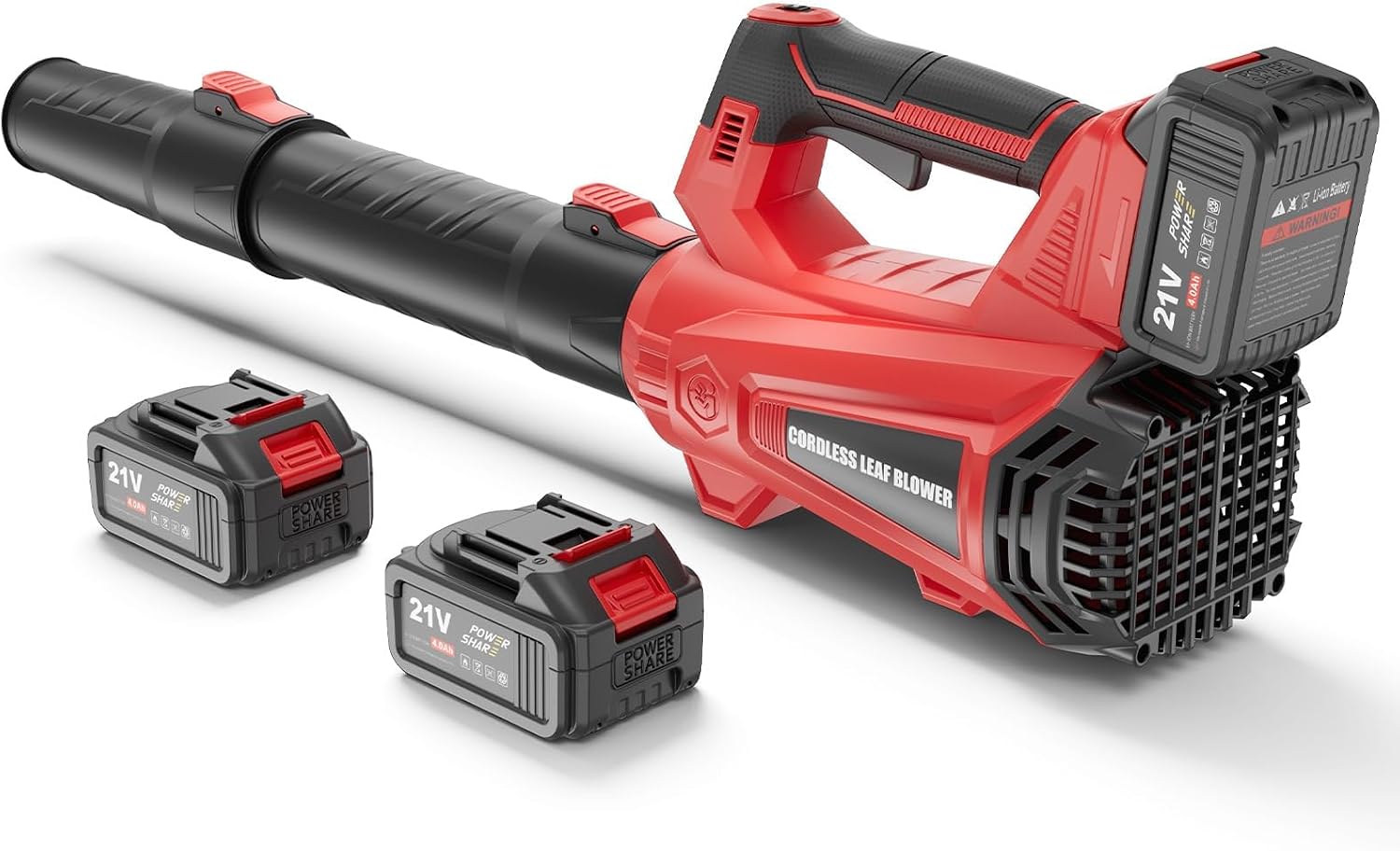
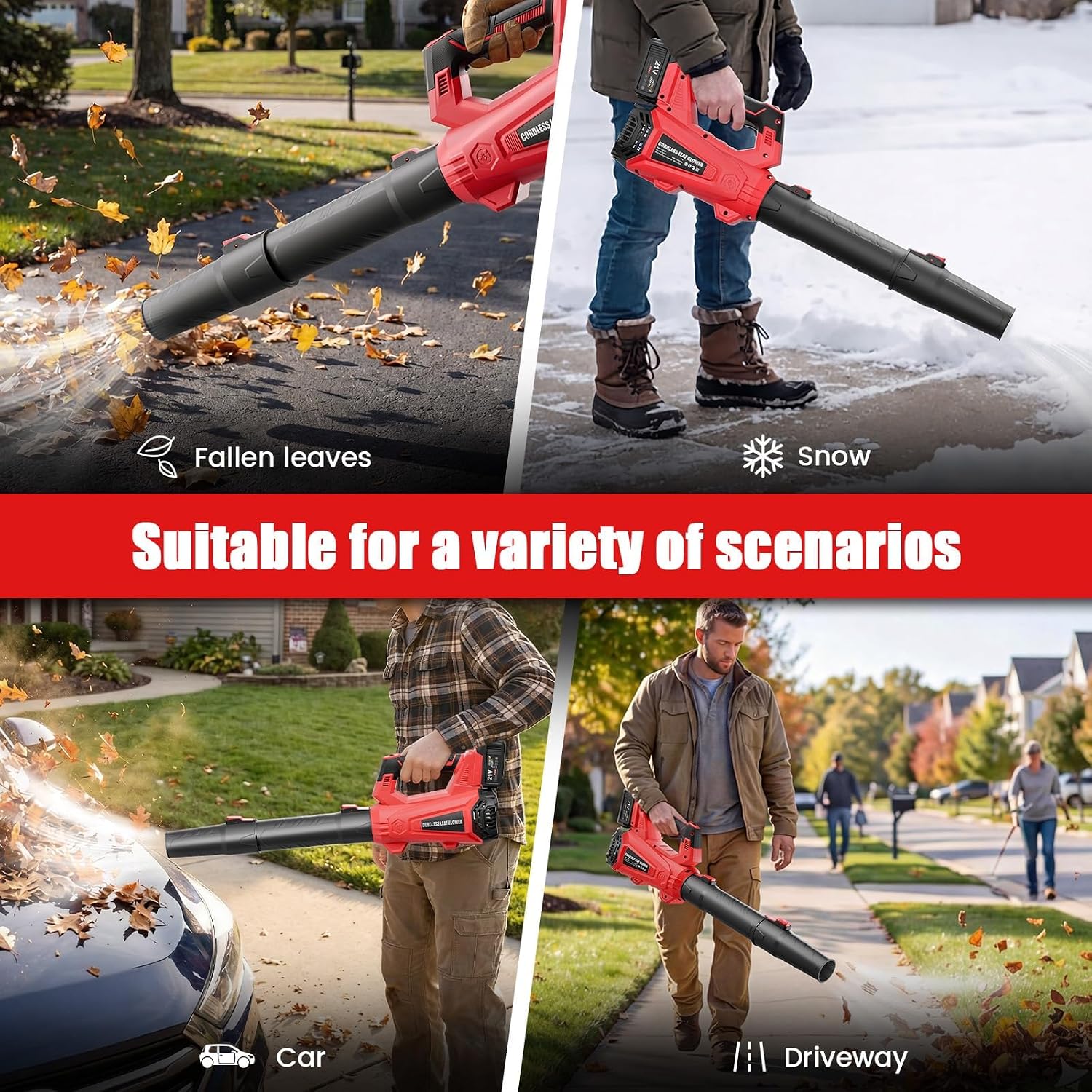
The RAXONE cordless electric leaf blower is a handheld blower sold online for light yard work. The listing leads with 800 CFM and highlights six speed settings, tubes in different sizes, a light body, and a long-lasting battery. It’s the kind of product that sells on big numbers at a small price.
I want to be straight with you about this one. RAXONE is a little-known brand, I couldn’t find a manufacturer manual, an independent test, or a published warranty for the 800 CFM version, and the numbers on blowers in this price class often don’t hold up when you read the fine print. This RAXONE electric leaf blower cordless 800CFM review sets out what the listing says, what I could actually check, how to judge the claims yourself, and who this kind of blower is still good for.
It can be, for light jobs on a tight budget, as long as you don’t expect 800 CFM of real-world power. A light 20V blower with several speeds and an extension tube is handy for patios, porches, garages, and sweeping up after mowing. Be careful if you have a big yard or wet leaves: a related RAXONE listing shows only 2.4 cubic meters per minute (about 85 CFM) on its spec sheet, similar 800 CFM blowers sometimes list 73 MPH in their own fine print, and well-known brands rated at 530 CFM have measured only 14 to 17 newtons of force.
Verdict Summary
Best for light cleanup on a small budget
- Best for: small yards, patios, decks, porches, and garages where a low price matters more than top performance
- Standout strength: a low price, multiple speed settings, extension tubes, and a lightweight body, according to the listing
- Biggest weakness: the 800 CFM claim can’t be checked, and I found no manual, warranty details, or independent test
- Skip it if: you have a large yard, heavy wet leaves, or want a proven brand and a clear warranty
Score basis: raised by the price, the speed options, and the light design that budget buyers value; lowered by the unverified airflow claim, the missing independent data, the unclear warranty, and the unknown battery details. It’s an editorial judgment, not a lab score, and it isn’t based on hands-on testing.
🔍 What the Listing Says and What I Could Confirm
Here’s a plain look at what’s known, what’s implied, and what’s missing. “Not confirmed” means I looked and couldn’t find it, not that the product lacks it.
| Item | What I found | Source |
|---|---|---|
| Brand | RAXONE. A small online brand. I found its blower listings on Newegg, not a manufacturer site | Newegg |
| Type | Cordless electric handheld leaf blower | Listing title |
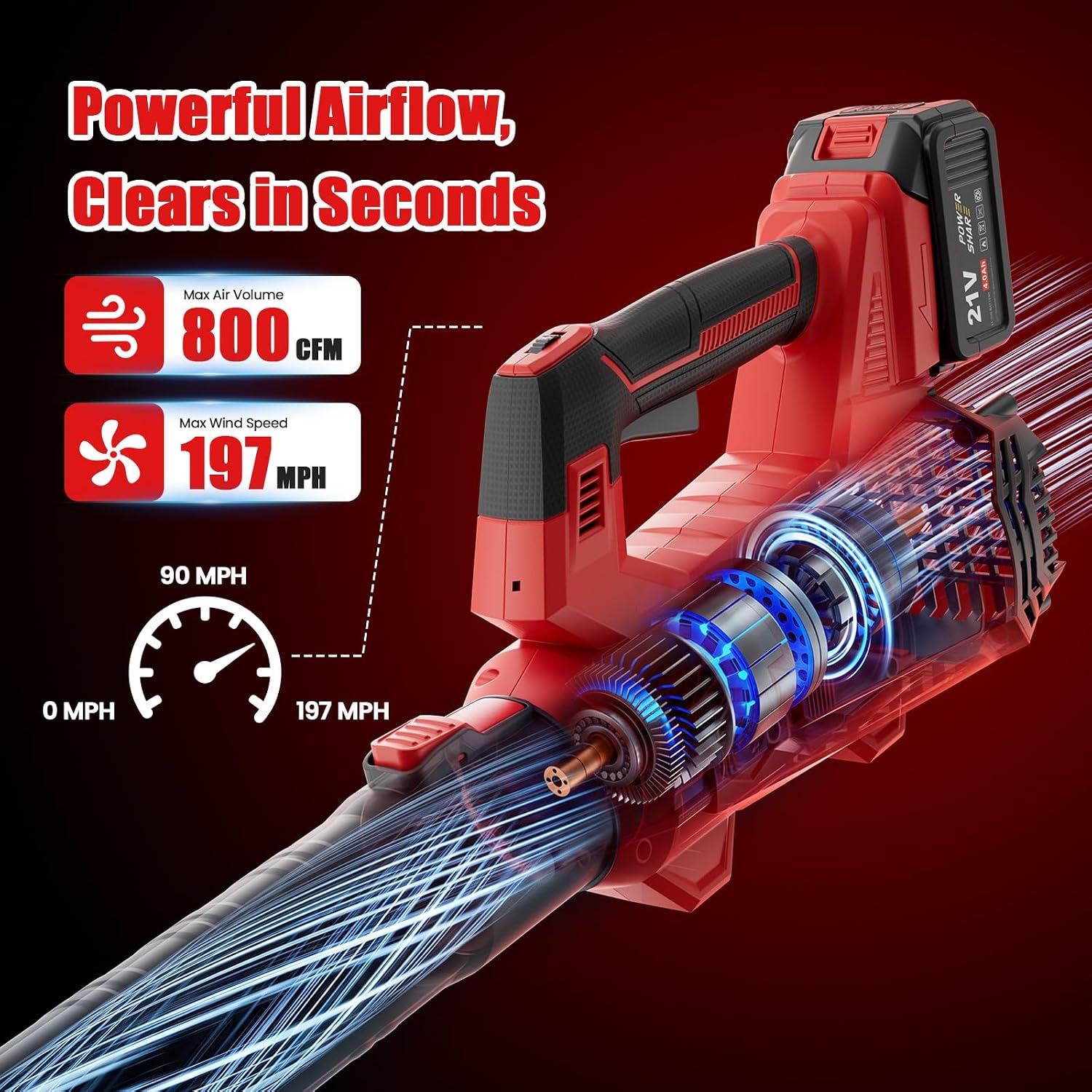
| Airflow claim | 800 CFM | Listing title |
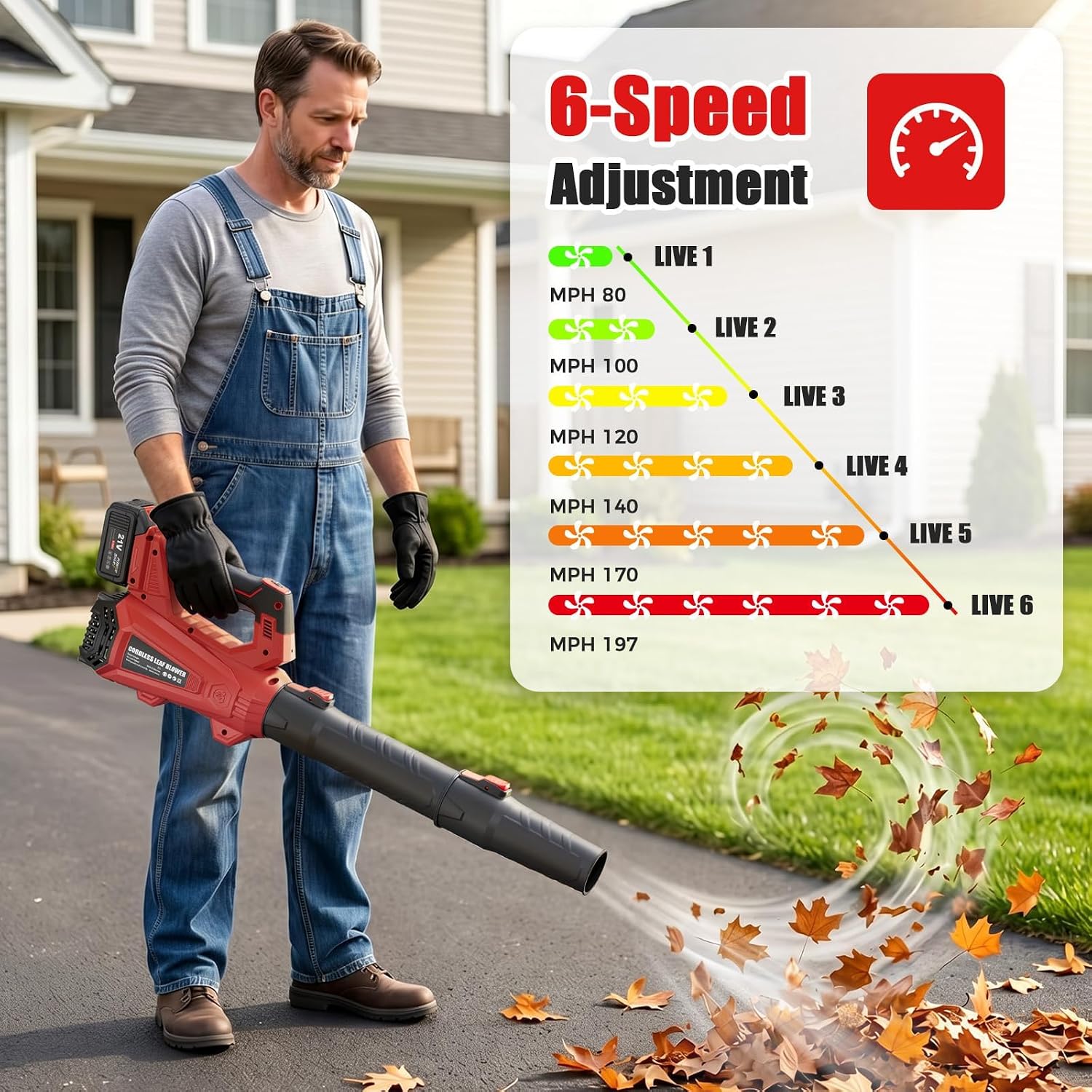
| Speed settings | 6, per the listing’s photos. A related RAXONE model on Newegg has 2 speeds | Listing photos; Newegg |
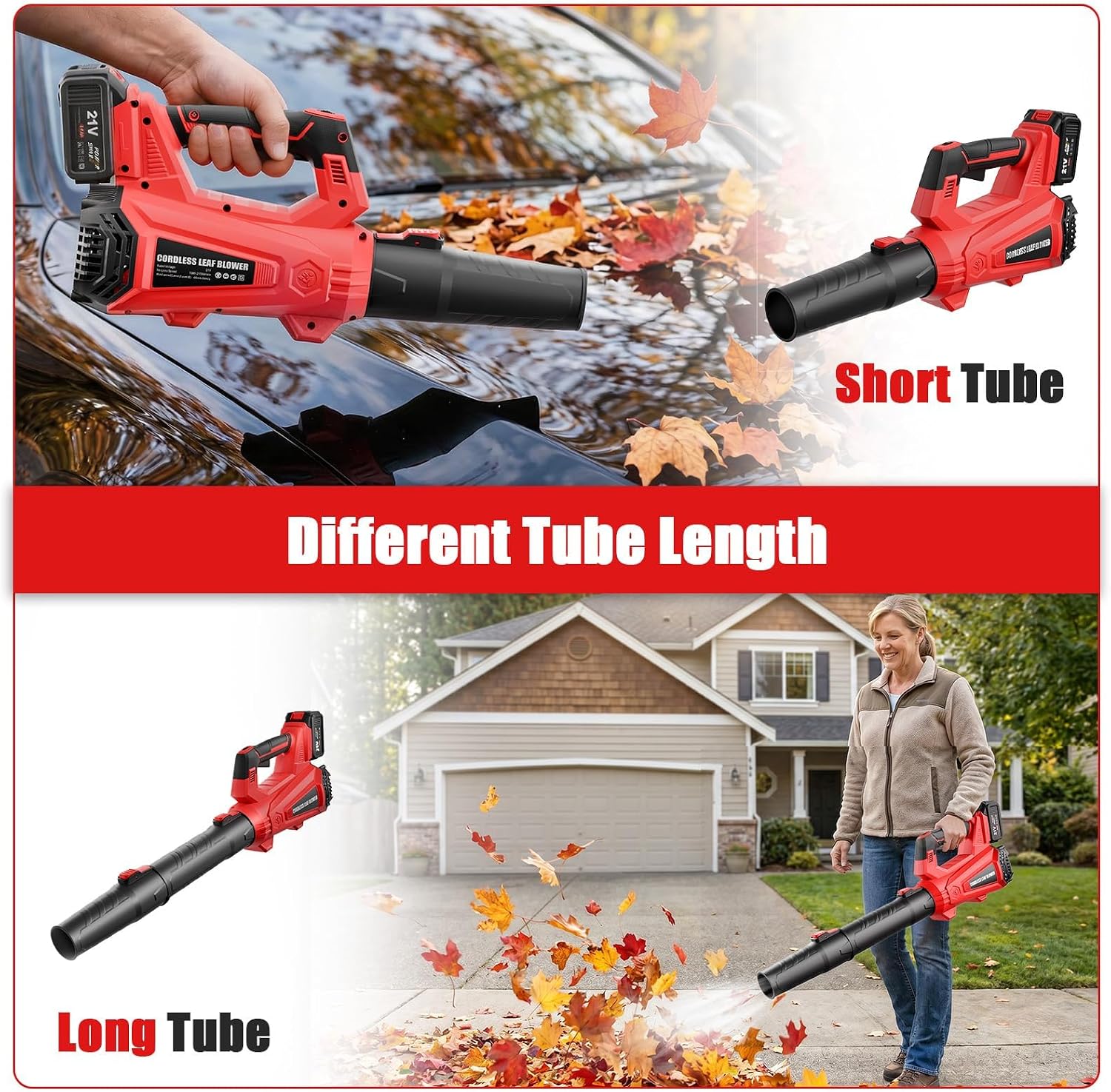
| Tubes | More than one tube size, per the listing’s photos | Listing photos |
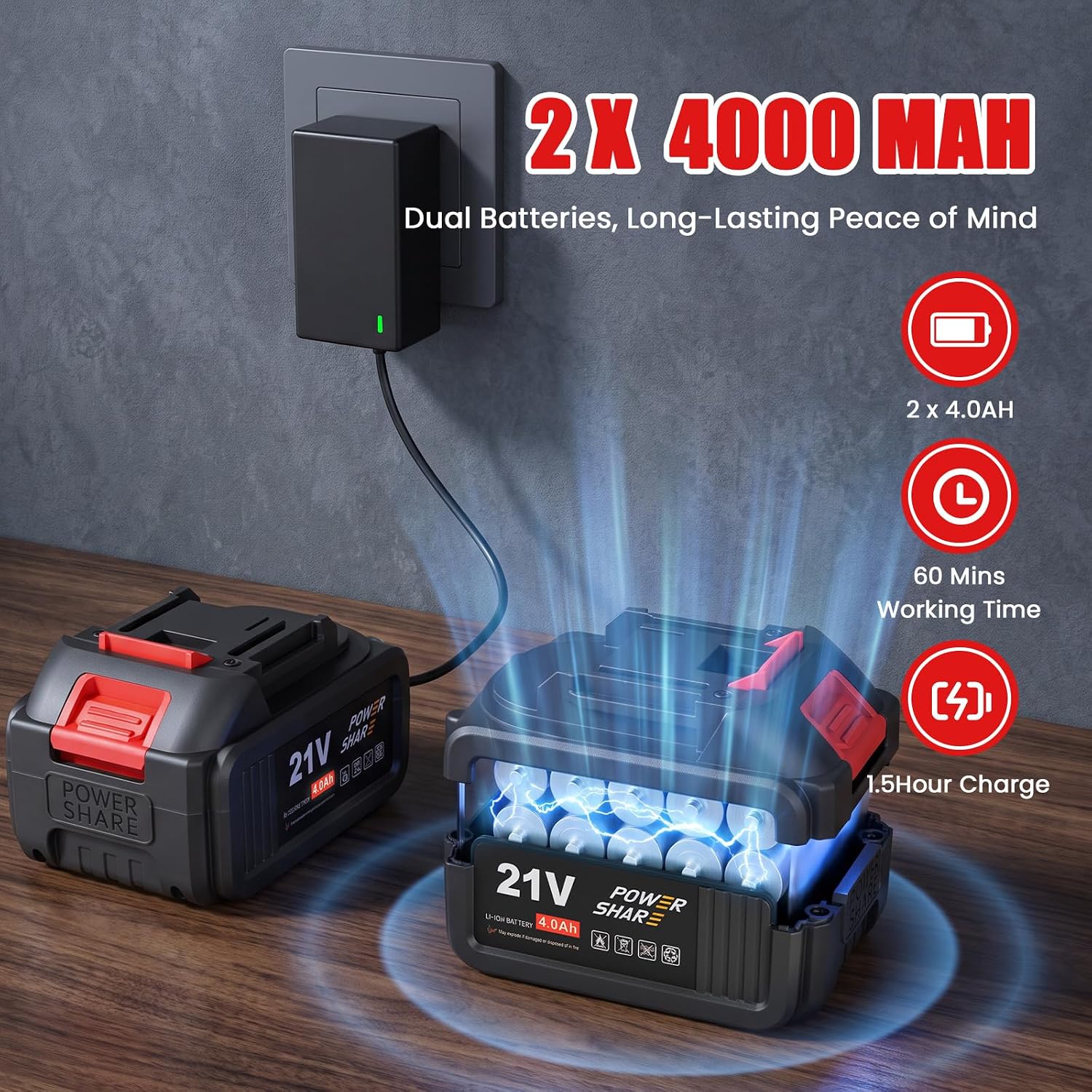
| Battery | Not confirmed. RAXONE’s 2-speed Newegg model uses a 20V, 2.0Ah battery | Newegg |
| Charger | Not confirmed. RAXONE’s 2-speed model lists a 1-hour charge | Newegg |
| Motor | Not confirmed. I couldn’t verify whether it’s brushless | None found |
| Weight | Not confirmed. Similar 20V blowers list roughly 3 to 6.3 lb | Similar listings |
| Noise | Not published | None found |
| Manual and warranty | Not found | None found |
| Independent tests | None found | None found |
🧪 Can a 20V Blower Really Move 800 CFM? A Reality Check
Big numbers on budget blowers aren’t unusual. While looking at similar 20V and 21V blowers, I saw advertised airflow all the way from 488 CFM to 930 CFM, mostly from little-known brands. Real tool-makers’ numbers tend to be lower, and when independent testers measure force, the results are more modest than the airflow suggests. Here are the reference points I could find:
| Blower | Numbers | Source |
|---|---|---|
| RAXONE 2-speed model (Newegg) | 160 MPH; 2.4 m³/min air volume (about 85 CFM); rated power 300 W; 20V 2.0Ah battery | Brand’s own sheet for a related model |
| Similar 20V, 6-speed, 800 CFM kit (Walmart) | Headline 160 MPH and 800 CFM. Its own spec section says 117 km/h (73 MPH), 823 CFM, 2,877 g (about 6.3 lb), and a 14,000 r/min no-load speed | Another seller’s listing |
| WORX WG547 | 270 / 360 CFM, 55 / 75 MPH | WORX manual; see our review |
| RYOBI 18V jet fan blower | 350 CFM, 100 MPH | RYOBI; see our review |
| SKIL PWR CORE 40 | 530 CFM; measured 10.8 N on high and 14.1 N in boost | Pro Tool Reviews; see our review |
| EGO LB5302 kit | 530 CFM and 110 MPH in turbo; measured 16.5 N | Pro Tool Reviews; see our review |
A quick sanity check on the math
Moving 800 CFM of air at 160 MPH at the same time takes a lot of power. Using the simple kinetic-energy formula for a moving air stream (half the air density times the airflow times the speed squared), 800 CFM at 160 MPH works out to roughly 1,100 watts of jet power. That’s before motor and fan losses, which push the electrical draw higher. A 4.0Ah, 20V Max battery holds about 72 watt-hours at its 18V nominal rating, so it would be empty in about four minutes at that draw. RAXONE’s own related model lists a 300 W rated power.
Don’t take this as proof that the listing is wrong. Makers usually measure airflow and air speed separately, airflow without a nozzle and speed at the nozzle tip, so both peak numbers are never reached together. It does mean you shouldn’t expect 800 CFM and 160 MPH from one blow, and it’s why I treat the headline figure as a marketing number until someone measures it.
🔑 Speeds, Tubes, and How to Get the Most From It
I couldn’t find the RAXONE manual, so the tips below are general ones that apply to most handheld battery blowers, plus what the listing’s photos suggest. Follow the manual that comes in your box first.
Six speed settings
The listing’s photos highlight six speed settings. More steps mean finer control: low settings for dusty shelves, garden beds, and the car, and higher settings for stubborn leaves. On budget blowers, the top settings drain the battery quickly, so working a step or two below maximum often gets the job done and stretches your charge.
Different tube sizes
Having tubes in more than one size lets you switch between a short, handy blower for tight spots and a longer reach for decks, gutters, and wide patios. A longer tube is easier on your back but can reduce the air speed at the tip, which is my observation about tube design in general, not a RAXONE test result.
Working technique
- Start at a lower speed and step up only when the debris doesn’t move
- Blow along the edges of a pile first, rather than straight into the center
- Loosen stuck leaves with a rake or broom before you blow
- Keep the nozzle low and angled, and sweep in one direction toward a collection spot
- Wear eye protection and keep people and pets away, since a blower can throw grit and small stones
Battery habits: fully charge the battery before first use, charge indoors, keep batteries away from metal objects, and take the battery out before swapping tubes or clearing a clog. Those are common-sense practices, not RAXONE instructions.
🔋 Battery, Runtime, and Charging
This is where budget blowers differ most from the brand-name ones. I couldn’t confirm the RAXONE 800 CFM model’s battery size or runtime, so here is what comparable listings claim:
| Source | What it says | How much to trust it |
|---|---|---|
| RAXONE 2-speed model (Newegg) | 20V, 2.0Ah battery; 1-hour charge | Brand’s own sheet, but for a different model |
| Similar 6-speed kit with two 4.0Ah batteries (Newegg) | Up to 30 minutes per battery on low speed | A listing claim for a different brand |
| Another similar 6-speed 4.0Ah kit | 130 minutes on levels 1 and 2, 35 minutes on levels 3 and 4, 18 minutes on levels 5 and 6 | A seller claim, not a test |
| Similar 6-speed kit at Walmart | Two 4.0Ah batteries and a 2A charger; full charge in about 2 hours | Another seller’s listing |
Runtime depends on battery size, speed setting, temperature, and battery age. Treat claims from unknown brands as best-case numbers.
The pattern is the one you’d expect: a low speed can last for a long time, and the top speeds can run out in less than 20 minutes. If a listing includes two batteries, the second one is worth more than any extra speed setting, because you can keep working while the first one charges.
One more thing. The batteries in this class are usually tied to the blower and don’t fit other brands’ tools. I couldn’t confirm that for RAXONE, but assume you can’t borrow batteries from DEWALT, RYOBI, or WORX tools. If you want a battery that works across many tools, a name-brand platform is a better long-term buy.
🛠️ Maintenance and Storage
A small battery blower needs little upkeep. These are general care steps for this type of tool, since I couldn’t find a RAXONE manual. The intervals are mine.
| Item | What to do | When |
|---|---|---|
| Battery | Remove it before cleaning, changing tubes, or clearing a clog | Every time |
| Air inlet | Keep it clear of leaves, hair, and dust, since a blocked inlet cuts airflow | Before each use |
| Tubes and joints | Check that they’re seated and not cracked before you start | Before each use |
| Cleaning | Wipe with a dry or slightly damp cloth. Don’t spray with water or hose it off | After use |
| Charging | Use the charger that came with the kit, charge indoors, and don’t leave batteries on the charger for days | Every charge |
| Battery storage | Store at room temperature, away from heat and metal objects, and top up partly charged batteries during long storage | Between seasons |
| Storage | Keep the blower dry, out of the weather, and out of children’s reach | Between uses |
🔧 Common Problems and What to Check
RAXONE’s manual wasn’t available to me, so this is a general checklist for small battery blowers.
| Symptom | What to check |
|---|---|
| Won’t start | Check that the battery is charged and fully seated, and that any safety lock or switch is engaged |
| Stops after a short time | The battery may be low or too hot. Let it cool, then recharge. At top speeds, short runs are normal for small batteries |
| Weak airflow | Check for a blocked inlet or tube, loose tube joints, and a low battery. Weak batteries cut performance before they die |
| Battery won’t charge | Check that the charger is plugged in and the contacts are clean and dry. A charger light that stays red or off means check the connection |
| Loud rattle or vibration | Stop and remove the battery. Check for debris in the fan area or a loose tube, and contact the seller if it continues |
| Warranty or defect | Contact the seller through Amazon and keep your order record. Ask what warranty applies, since I couldn’t find one |
⚖️ Weight, Noise, Safety, and Use by Job
Weight and handling
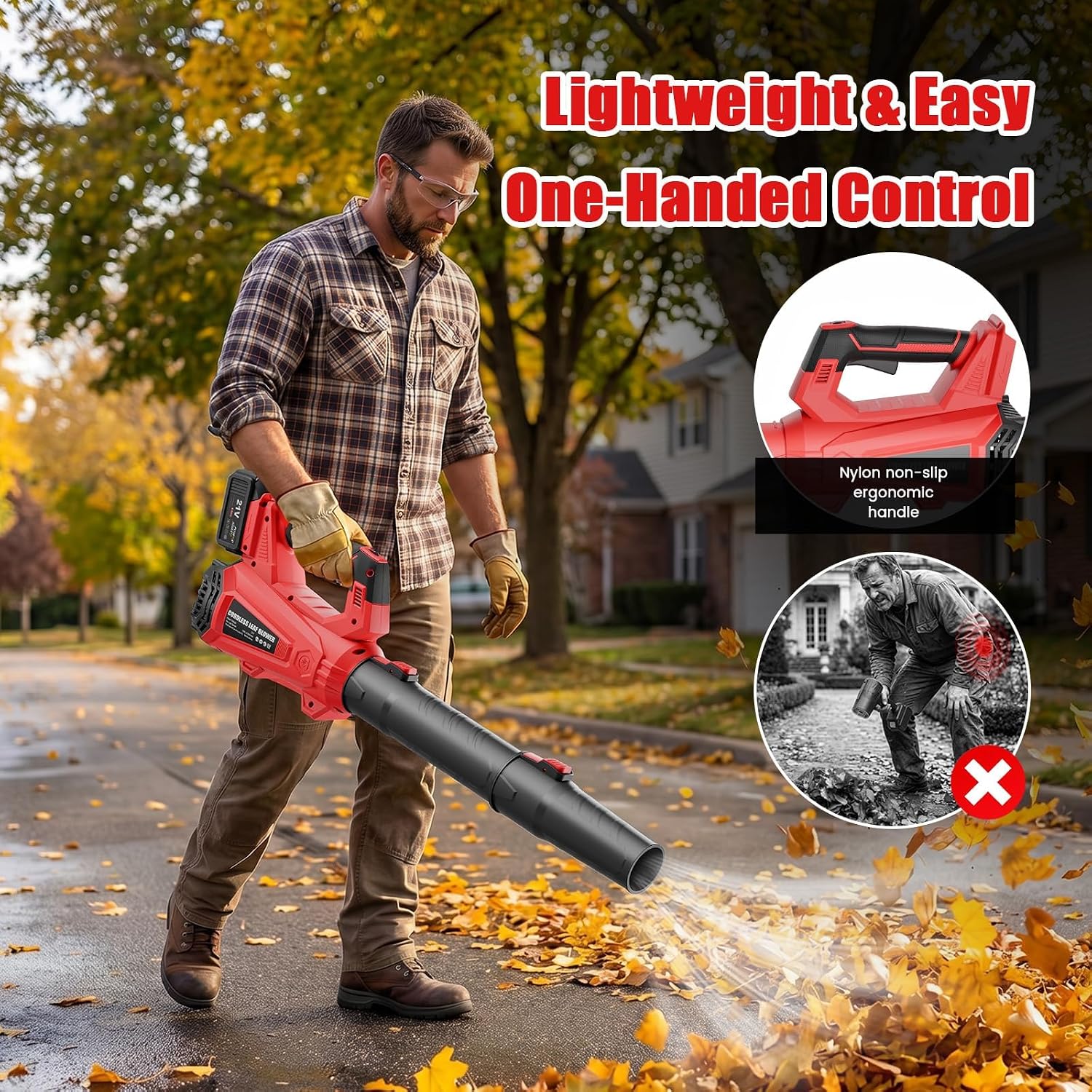
The listing’s photos stress a lightweight body, which fits this kind of blower. A similar 20V six-speed blower lists 2,877 g, about 6.3 lb, while some two-speed models list around 3 to 4.8 lb, so I can’t give an exact weight for this one. Check the spec table on your listing, and remember that a battery adds weight.
Noise
No noise rating is published for this model, and I wouldn’t trust a “quiet” claim without a measurement. Small high-speed motors can be shrill even when they’re not very loud. Wear hearing protection if you’ll run it for a long time, and check your local noise rules.
Safety basics
- Wear eye protection, and use a dust mask in dusty conditions
- Keep bystanders, children, and pets well away, and never point the nozzle at people
- Check the area for rocks, glass, and other objects the blower could throw
- Don’t use it in the rain or on wet surfaces, and keep the battery and charger dry
- Remove the battery before changing tubes or clearing a jam
- Use only the charger that came with your kit
What the numbers suggest, by job
These are reasoned from the listing’s claims and comparable blowers, not from my own testing.
- Patio, porch, deck, and garage: a good fit for a light cordless blower.
- Sweeping up after mowing: reviewers on a similar blower say they use it for walkways and the driveway after cutting grass.
- Dry leaves on a small lawn: workable, especially with a second battery.
- Dust, car cleaning, and workshops: the lower speed settings suit these.
- Wet or matted leaves: expect slow going, whatever the CFM claim says.
- Large yard: not a good match, since small batteries run down quickly at high speeds.
⚔️ How It Compares
The honest comparison here isn’t on airflow numbers, because those aren’t measured the same way. It’s on what you can verify: published specs, a real warranty, and independent testing. Treat the table as a rough guide.
| Blower | Key specs | Best for | Trade-off vs. the RAXONE |
|---|---|---|---|
| RAXONE 800 CFM (this review) | 800 CFM claimed; 6 speeds per photos; specs unverified | Low price and light cleanup | No manual, warranty details, or independent tests found |
| RAXONE 2-speed (Newegg) | 160 MPH, 300 W, 2.4 m³/min (about 85 CFM) | Light dust and debris | A different, much lower-airflow model |
| WORX WG547 | 270 / 360 CFM, 55 / 75 MPH per the manual | WORX PowerShare owners; see our review | Published specs and a 3-year warranty |
| RYOBI 18V jet fan blower | 350 CFM, 100 MPH | RYOBI ONE+ owners; see our review | Published specs and a 3-year warranty |
| DEWALT DCBL722B | Up to 450 CFM, 125 MPH with concentrator | DEWALT 20V MAX owners; see our review | Costs more; tool only |
| EGO LB5302 kit | 530 CFM and 110 MPH in turbo; 16.5 N measured | More proven power; see our review | Costs more |
Airflow claims (CFM): the RAXONE listing vs. brand-name ratings
If you want published specs and a clear warranty, see our RYOBI jet fan blower review or our DEWALT DCBL722B review. If you want measured force, see our EGO LB5302 review.
⭐ Owner Feedback, Pros and Cons
I couldn’t find reviews for this exact RAXONE model, so I’m not describing patterns I haven’t seen. A similar 20V six-speed blower at Walmart shows 4.4 out of 5 from 47 ratings, with 70 percent five-star and 9 percent one-star, and the owners I could read praised the power for the price and used it for walkways and driveways after mowing. That’s a different brand, so treat it as context, not a verdict on RAXONE. The points below are my analysis of what I found:
- Low price compared with name brands
- Six speed settings, per the listing’s photos
- Tubes in different sizes for reach and storage
- Light design
- Cordless, so no fuel or cord
- Several speeds suit dusting as well as leaf work
- 800 CFM can’t be verified, and the airflow claim looks high for a 20V tool
- No manual, warranty details, or independent tests found
- Battery size, count, and runtime aren’t confirmed
- Small unknown brand, so support and parts are uncertain
- Batteries probably don’t fit other brands’ tools
- No noise rating
- Top speeds likely drain a small battery fast
🎯 Who Should Buy It
Buy it if:
- You have a small yard, patio, or garage to clear
- You want an inexpensive cordless blower for light jobs
- You’re fine with a lesser-known brand and have checked the return terms
- You’ll treat the 800 CFM figure as marketing, not a promise
Skip it if:
- You have a large yard or heavy, wet leaves
- You want a published manual and a clear warranty
- You need batteries that work across many tools
- You want measured force. Look at the EGO LB5302 or a similar tested blower
❓ RAXONE 800 CFM Cordless Blower FAQ
Is the RAXONE 800 CFM cordless leaf blower worth buying?
It can be for light jobs on a small budget. Treat the 800 CFM figure as a listing claim, since I couldn’t verify it and found no independent test, manual, or warranty details for this model.
Is it really 800 CFM?
I couldn’t confirm it. A related RAXONE model on Newegg lists 2.4 m³/min, about 85 CFM, and a similar 800 CFM blower from another seller lists 73 MPH in its own spec table. Makers also measure airflow and speed separately, so you won’t get the peak of both at once.
What do the six speeds do?
The listing’s photos highlight six speed settings. Lower settings suit dust and light debris, and higher settings suit stubborn leaves, though top speeds drain a small battery fast.
Does it come with two batteries?
I couldn’t confirm this for the RAXONE 800 CFM model. Many kits in this class include two, so check the listing’s box contents and the battery size.
How long does the battery last?
I couldn’t confirm it. Comparable six-speed kits claim long runtimes on low speeds, such as 130 minutes, and as little as 18 minutes on the top speeds. Treat that as a best case.
How long does it take to charge?
Not confirmed for this model. RAXONE’s related 2-speed model lists a 1-hour charge, and a similar six-speed kit lists about 2 hours with a 2A charger.
Is it brushless?
I couldn’t verify it. Check the listing’s spec table and ask the seller if it isn’t stated.
How loud is it?
No noise rating is published for it. Wear hearing protection and check your local noise rules.
How much does it weigh?
Not confirmed. A similar 20V six-speed blower lists about 6.3 lb, and some two-speed models list roughly 3 to 4.8 lb, so check your listing.
Is it good for wet leaves?
Probably not. Wet, matted leaves are hard for any small battery blower, and the airflow claim hasn’t been verified.
Who is RAXONE?
A small online brand. I found its blower listings on Newegg, but I couldn’t find a manufacturer website, a manual, or published warranty terms.
What warranty does it have?
I couldn’t find one. Ask the seller before you buy, and check Amazon’s return window on the listing.
Can I use batteries from other brands?
Probably not. Batteries on small unbranded blowers are usually specific to the tool, though I couldn’t confirm it for this model.
Is a name-brand blower a better choice?
If you want a manual, a clear warranty, and published specs, yes. Brands like RYOBI, WORX, and DEWALT cost more but publish their numbers, and some have independent test data.
🏆 Final Verdict: Is the RAXONE 800 CFM Blower Worth It?
The RAXONE 800 CFM cordless blower is an inexpensive, light option for small jobs, and it has features like six speeds and different tube sizes that people like. The trouble is how much I couldn’t verify: the airflow, the battery, the warranty, and the maker’s support. A related RAXONE model lists far lower airflow, and the 800 CFM figure looks like a marketing number.
If you want something cheap for a patio, deck, or garage and you’re comfortable with a small brand, it can do the job. If you want proof of performance and a clear warranty, spend a bit more on a brand that publishes its specs. If it fits how you work, you can check the latest price, what’s included, and the return terms on Amazon.
📸 RAXONE Cordless Blower Photos
Click to see full view
📚 More Blower Reviews
RYOBI 18V 100 MPH Jet Fan Leaf Blower Review & Buying Guide
A budget 18V blower with published specs and a 3-year warranty.
DEWALT DCBL722B 20V MAX XR Blower: Specs, Pros & Cons
A light cordless handheld for DEWALT 20V MAX owners.
EGO LB5302 56V 530 CFM Leaf Blower: Specs, Pros & Cons
A boxed cordless kit with a battery and charger, and measured force.
✅ Before You Buy: Quick Checklist
Because I couldn’t verify many details, these are worth a minute on the listing:
- The spec table: look for the real air speed and airflow, and whether it lists the numbers in different units
- Battery size and count: whether one or two batteries come in the box, and their Ah rating
- The charger: its rating and the stated charging time
- Warranty and returns: who handles claims, and how long the return window is
- The seller: read recent reviews, including the critical ones, and check the date
Affiliate Disclosure: BestLeafBlowerCordless.com is a participant in the Amazon Services LLC Associates Program, an affiliate advertising program designed to provide a means for sites to earn advertising fees by advertising and linking to Amazon.com. As an Amazon Associate, we earn from qualifying purchases.