
Makita XBU03Z 18V LXT Lithium-Ion Brushless Cordless Blower – Specs, Pros & Cons
As an Amazon Associate, I earn from qualifying purchases at no extra cost to you.
⚡ Overview: A Light 18V Handheld for Makita Battery Owners
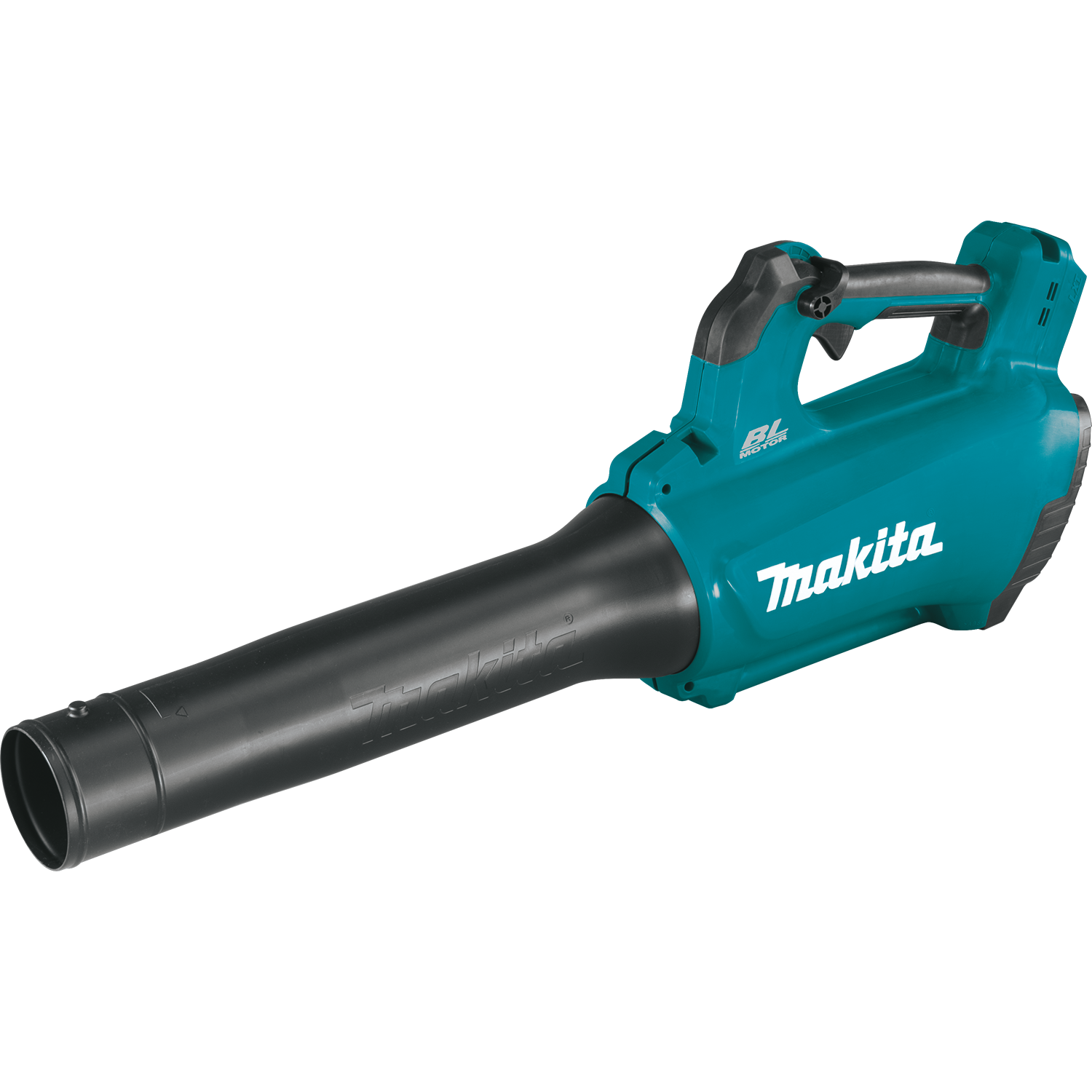
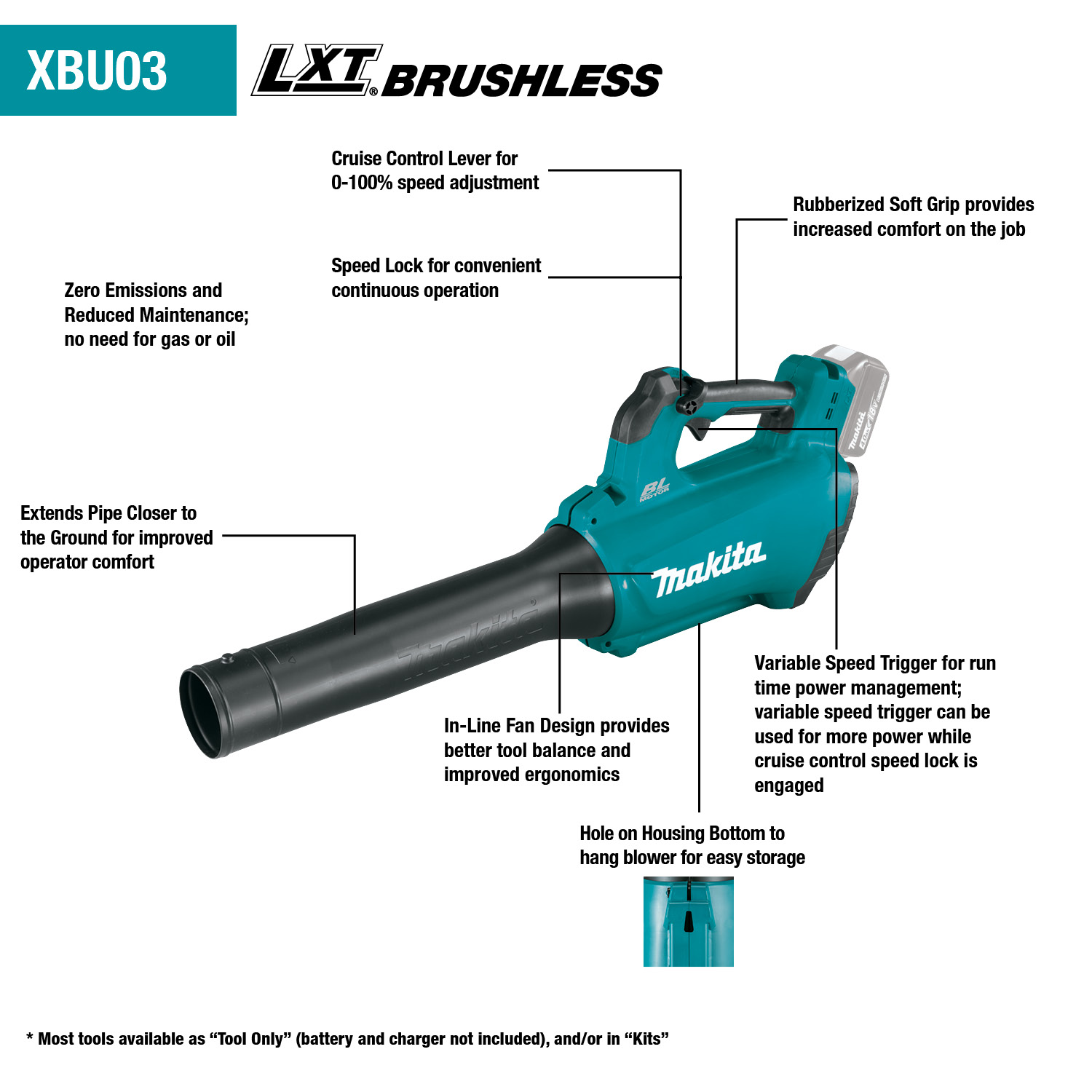
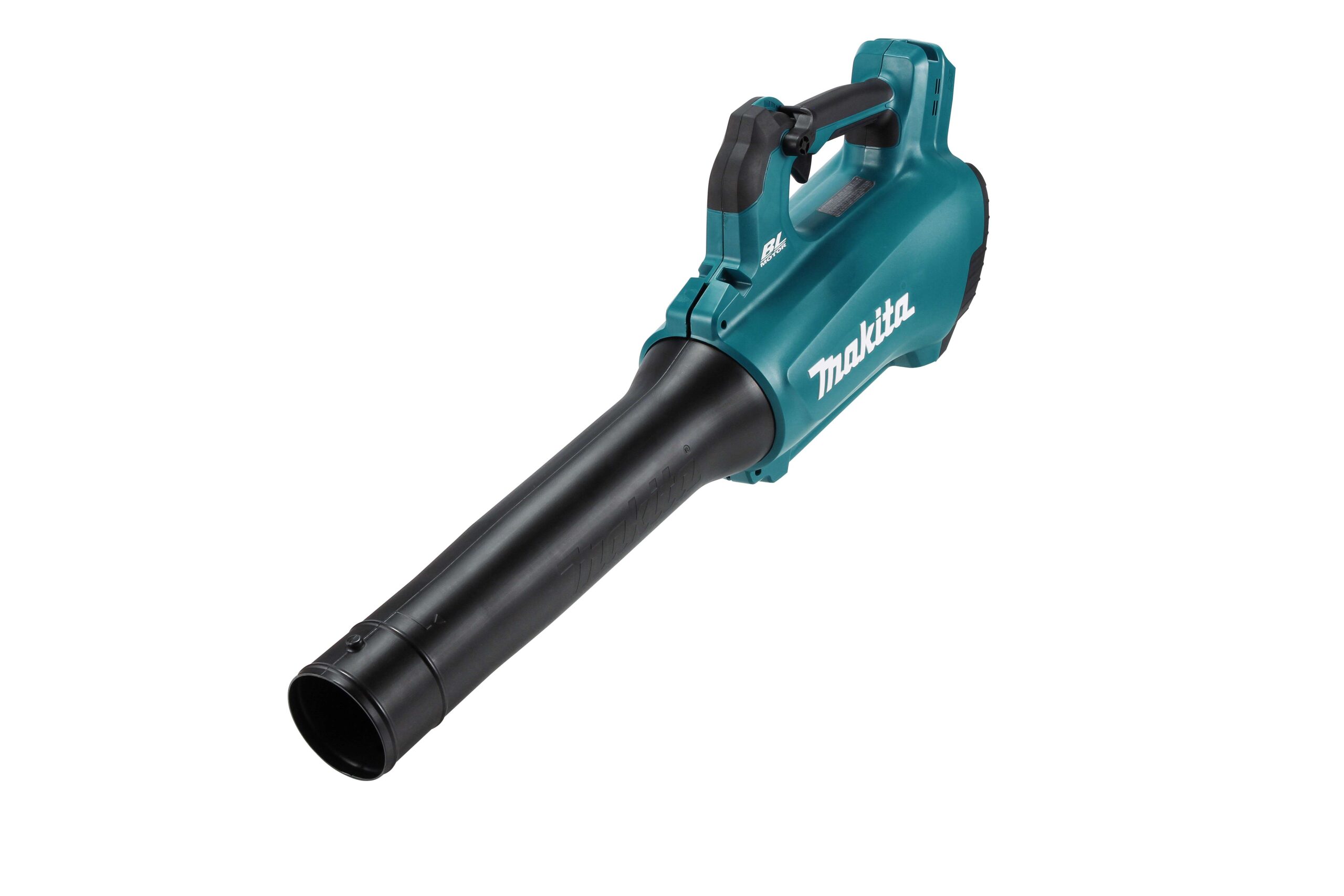
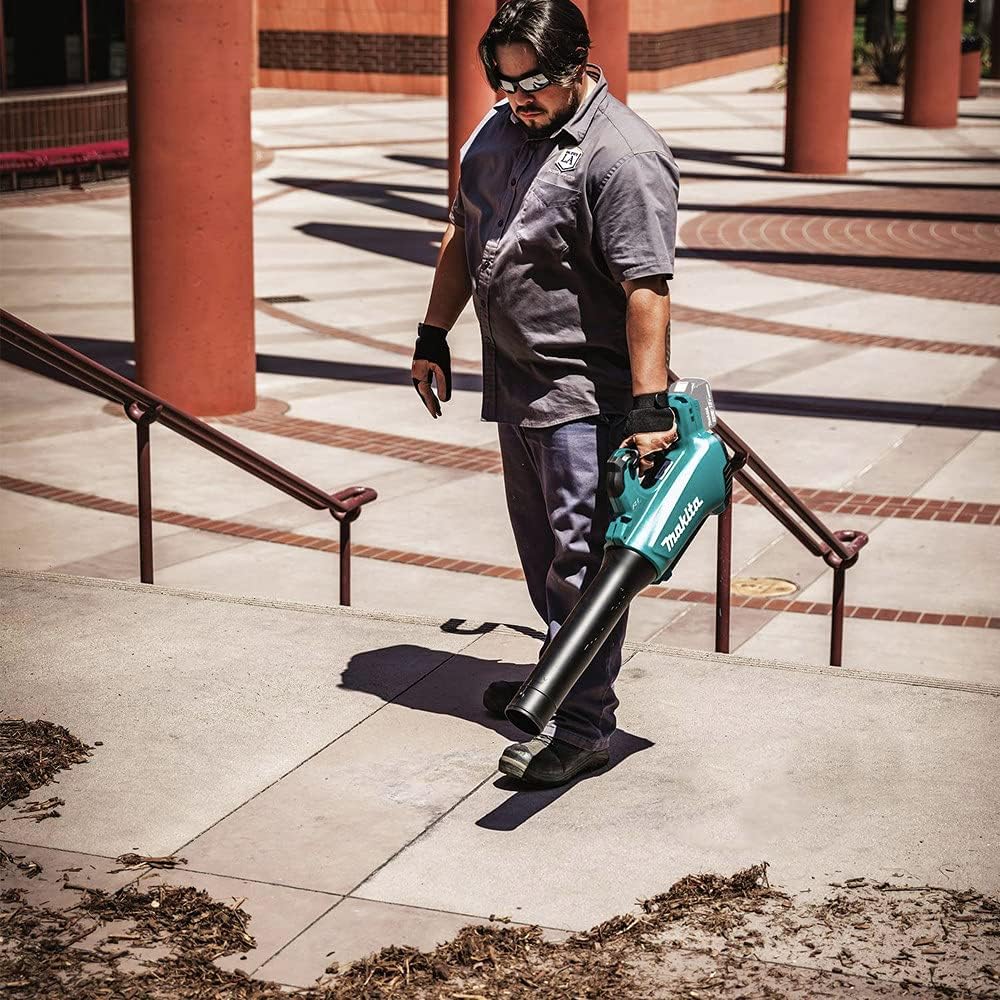
The Makita XBU03Z is a single-battery handheld blower for Makita’s 18V LXT platform. It uses a brushless motor, an in-line fan, a variable-speed trigger with a cruise control lever, and Makita’s XPT sealing against dust and water. Makita rates it at up to 459 CFM and 116 MPH, and it weighs about 6 lb with a battery attached.
It’s an easy tool to understand. If you already own LXT batteries, you add a light blower for a modest bare-tool price. If you don’t, you’re also buying a battery and a charger, and the blower will drain small packs in minutes on high. Pro Tool Reviews bench-tested it at about 11 N of force, which was the best of the 18V single-battery blowers it had tested at the time. This review covers the specs, the sources that disagree, how long a charge really lasts, and who should buy this blower or skip it.
Yes, if you already own Makita 18V LXT batteries and want a light blower for driveways, patios, decks, and small to medium yards. It weighs about 6 lb with a battery, measured 11.3 N in independent testing, and costs about $169 to $216 as a bare tool. Runtime on high is short, with 10 minutes 25 seconds on a 5.0Ah battery, and it isn’t built for heavy, wet leaves. Choose a stronger blower like the EGO LB5302 kit or the EGO LB5800 if you don’t own Makita batteries or you want more force.
Verdict Summary
Best for Makita LXT owners with small to medium cleanup jobs
- Best for: homeowners, tradespeople, and shop or jobsite crews who already own Makita 18V LXT batteries and want a light handheld for cleanup
- Standout strength: a 6 lb tool with 11.3 N of measured force, a cruise control lever, XPT sealing, and a low bare-tool price
- Biggest weakness: short runtime on high, and force that’s modest next to 56V blowers
- Skip it if: you don’t own Makita batteries, you have a large yard, or you deal with heavy wet leaves
Score basis: raised by the low weight, the measured 11.3 N, the low bare-tool price, the XPT and Star Protection features, and strong owner ratings; lowered by the short high-speed runtime, force below the 18 N-plus blowers on the 56V platforms, the extra cost of a battery and charger, and test data that dates back several years. It’s an editorial judgment, not a lab score, and it isn’t based on hands-on testing.
📊 Specifications
Core specs
| Spec | Value | Source |
|---|---|---|
| What you get | XBU03Z is the tool only. The XBU03SM1 kit adds one 4.0Ah battery and a charger | Makita; Pro Tool Reviews |
| Battery system | Makita 18V LXT, single battery (not the 18V X2 system) | Makita; Pro Tool Reviews |
| Motor and fan | Makita-built BL brushless motor with an in-line fan design | Makita |
| Controls | Variable-speed trigger with a cruise control (speed lock) lever | Makita; dealer listings |
| Air volume | Up to 459 CFM | Makita |
| Air speed | Up to 116 MPH | Makita |
| Blowing force | 11.3 N peak, about 11 N average (measured) | Pro Tool Reviews |
| Noise | 60 dB(A) per ANSI B175.2 on Makita-based listings; 63 dB(A) on others | Dealer listings of Makita data |
| Weight | 4.6 lb without a battery and 6 lb with one on Makita’s page; older dealer listings show 5.1 lb and 6.5 lb with a 4.0Ah battery | Makita; dealer listings |
| Length | 32-1/2 in overall | Makita |
| Protection | XPT (Extreme Protection Technology) and Star Protection Computer Controls | Makita |
| Handling extras | Rubberized soft grip and a hole in the housing bottom for hanging storage | Dealer listings of Makita features |
| Weather rating | No IP rating found. XPT improves dust and water resistance | Makita |
| Warranty | 3-year limited warranty on the tool | Dealer listings |
Figures that vary by source or region
These are the numbers where sources disagree. I show each one instead of picking a winner.
| Spec | What sources say | Why it differs |
|---|---|---|
| Weight | 4.6 lb bare and 6 lb with a battery (Makita’s page); 5.1 lb bare and 6.5 lb with a 4.0Ah battery (many dealers); 6.5 lb on an Amazon-based listing | Makita’s page looks updated, while dealers kept the older spec sheet |
| Noise | 60 dB(A) (Ace Tool, GME Supply), 63 dB(A) (Tool Nut, True Value), 50–70 dB (a marketplace range) | Dealers copy different spec sheets; the marketplace range isn’t a rating |
| Shipping weight | 7.28 lb, 7.72 lb, and 7 lb | These are shipping weights, not tool weights |
| Runtime | 10 min 25 s on high with a 5.0Ah battery and an estimated 8 minutes on 4.0Ah (Pro Tool Reviews); “up to 50% longer” than brushed tools (Makita marketing) | The first is a measurement, the second a comparison with brushed tools, not a runtime |
| Price | Bare tool: $169 (Tool Nut, ToolUp), $169.99 (GME), $179 (Ace Tool, others), $204 (OmegaTec), $216.27 (ToolSource, list $242) | Dealer pricing and date; check the current listing |
| Vacuum use | One dealer says an optional dust bag allows vacuum use and also says vacuum function is “No” | The listing contradicts itself, so I treat the XBU03Z as blower only |
💨 Power and Airflow: What 459 CFM and 11.3 N Add Up To
Makita’s spec sheet leads with 459 CFM and 116 MPH, but the number that tells you how a blower handles a pile is blowing force. Pro Tool Reviews hooked up a force meter and measured the XBU03Z at 11.3 N at its peak, with an average of about 11 N. At that time, it was the strongest of the 18V single-battery blowers the site had tested. For comparison, it measured Milwaukee’s Gen 2 M18 FUEL blower at 11.2 N and the first-generation Milwaukee at 8.6 N.
That result puts the XBU03Z in the clear-the-driveway group, not the heavy-debris group. On this site, the EGO LB5302 measured 16.5 N in turbo and the EGO LB5800 measured 18.0 N, and EGO’s larger blowers measure 20 N and up. Pro Tool Reviews treats about 20 N as the rough line where a cordless handheld can replace a gas blower for pros, so the Makita sits at roughly half that. The test is several years old, so newer blowers may change the picture. Pro Tool Reviews also listed low runtime as the main con.
Owners describe it the same way. Home Depot reviewers call it light, well balanced, and strong enough for piling leaves, clearing driveways, and blowing out gutters, and the main reason they buy it is compatibility with the Makita batteries they already own. One buyer found it too weak for leaves mixed with small sticks and planned to return it. That’s a fair reminder that 11 N is a light-duty figure. I haven’t used this blower, so I’m passing along their experience, not mine. If you’re comparing options, the current Amazon listing shows what’s bundled.
🔋 Battery, Runtime, and What You’re Buying Into
The XBU03Z is a bare tool, so the battery sets your runtime. Pro Tool Reviews had 5.0Ah batteries on hand and measured 10 minutes and 25 seconds on high. From that, it estimated roughly 8 minutes on the 4.0Ah battery that comes in the kit. That’s short, and it’s the main reason this blower suits small jobs better than whole-property cleanup.
Here’s how the common LXT pack sizes compare. The energy column is amp-hours multiplied by 18 V, and the high-speed runtime column scales Pro Tool Reviews’ measurement by capacity. Only the 4.0Ah and 5.0Ah figures come from the test, and the rest are my estimates:
| Battery | Stored energy (theoretical) | Estimated runtime on high | Source of the runtime |
|---|---|---|---|
| 2.0Ah | about 36 Wh | about 4 min | Scaled estimate |
| 3.0Ah | about 54 Wh | about 6 min | Scaled estimate |
| 4.0Ah | about 72 Wh | about 8 min | Pro Tool Reviews estimate |
| 5.0Ah | about 90 Wh | 10 min 25 s | Pro Tool Reviews measurement |
| 6.0Ah | about 108 Wh | about 12.5 min | Scaled estimate |
Scaled estimates assume runtime grows in proportion to capacity. Real runtime varies with temperature, battery age, and how often you use the trigger at full power.
Estimated runtime on high by battery size (minutes)
As a rough check, 90 Wh divided by 10 minutes 25 seconds gives about 520 W of theoretical average draw on high. That’s not a measured figure, but it shows why a small pack empties so fast. The cruise control lever helps by holding a steady speed, and a light trigger saves a lot of charge. Makita also advertises that its brushless motor delivers up to 50% longer runtime than similar brushed tools, but that’s a comparison with older motors, not a promise of minutes.
Getting more from your batteries
- Match the battery to the job. A 5.0Ah or 6.0Ah pack suits a yard, while a compact pack suits a quick garage sweep.
- Use the trigger, not the lock, for light work. Save the cruise control lever for long, steady passes.
- Keep a spare charged. Makita’s LXT chargers refill packs quickly, so rotating two batteries covers a larger yard.
- Use star-marked packs. Makita says Star Protection works when the battery carries the star symbol, guarding against overload and overheating.
The blower itself is the inexpensive part of the purchase. A battery and charger can cost as much as the tool, so if you’re starting from zero, compare the XBU03SM1 kit or a boxed kit on another platform. Check the Amazon listing for today’s price and what ships in the box.
⚖️ Weight, Noise, Build, and Real-World Use
Weight and handling
Makita’s own page lists 4.6 lb without a battery and 6 lb with one, and the tool is 32-1/2 inches long. Many dealers still show the older 5.1 lb and 6.5 lb figures. Either way, it’s among the lightest handheld blowers in this class. The in-line fan design keeps the weight centered, which owners describe as well balanced, and the handle has a rubberized soft grip. A hole in the bottom of the housing lets you hang the blower on a hook. One detailed owner write-up warns that the air intake sits at the very back of the tool, where it can pull in loose clothing, so keep sleeves and drawstrings clear.
Noise
Makita-based listings rate the XBU03Z at 60 dB(A) measured to the ANSI B175.2 standard, and others list 63 dB(A). Those are ratings, not the sound at your ear. Brushless 18V blowers are quieter than gas models, but a full-throttle fan is still loud, so use hearing protection for long sessions and check your local noise rules.
Build and durability
The blower combines a brushless motor with XPT, a seal that channels water and dust away from key internal parts, and Star Protection, which lets the tool and a star-marked battery monitor overload, over-discharge, and overheating. I found no IP rating, so keep it out of heavy rain, and I found no formal long-term durability data. Amazon’s page shows about 4.6 out of 5 across 3,439 ratings in one listing capture, and Home Depot shows 4.4 across 1,328 reviews, which is a strong track record for a tool in this price range.
What the numbers suggest, by job
These are reasoned from the specs and test notes, not from my own testing.
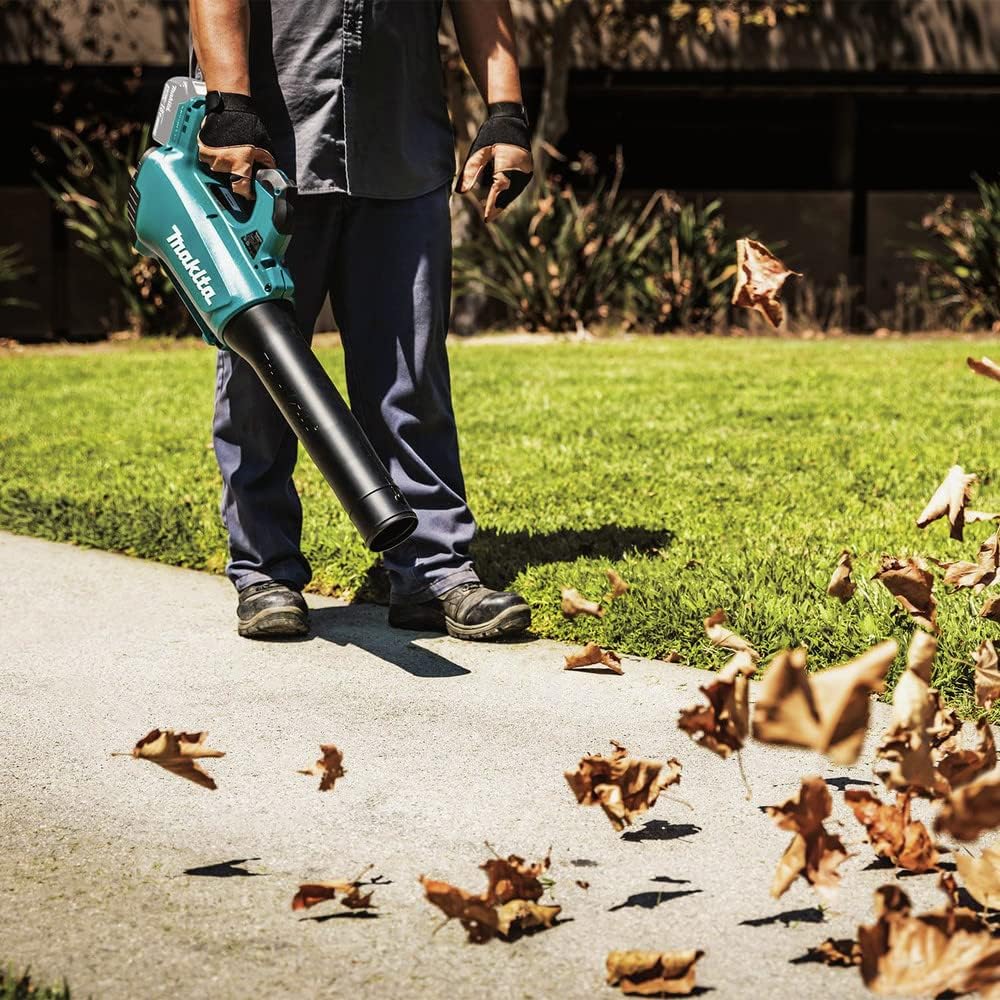
- Driveways, sidewalks, and patios: a good fit. This is the job owners mention most.
- Small to medium yards: workable with a 5.0Ah or larger battery and a spare.
- Garage, shop, and jobsite cleanup: the light weight and low profile make it easy to use for dust, chips, and clippings.
- Gutters and roofs: owners report using it for gutters and light roof debris.
- Wet or matted leaves: expect slow going at about 11 N. A stronger blower is a better match.
- Pine needles and light debris: low speed should be enough, and that’s where a battery lasts longest. This is an inference from the specs.
⚔️ How the XBU03Z Compares
Inside the 18V single-battery class
Pro Tool Reviews bench tests are the only measured force numbers I could line up for this class, and they were run at different times. Treat the ranking as a rough guide, not a like-for-like contest.
| Blower | Force | Key specs | Notes |
|---|---|---|---|
| Makita XBU03Z (this page) | 11.3 N peak (measured) | 459 CFM, 116 MPH; about 6 lb with a battery | Light, brushless, XPT sealing; bare tool |
| Milwaukee M18 FUEL Gen 2 | 11.2 N (measured) | 450 CFM, 120 MPH | Essentially tied in force; runs on M18 batteries |
| Milwaukee M18 FUEL Gen 1 | 8.6 N (measured) | Older model | Weaker than both |
| Makita XBU02Z (36V, 18V X2) | Not verified | Runs on two 18V batteries | One seller says it costs about twice as much; I didn’t verify its specs |
| DEWALT DCBL722B | Not verified | 450 CFM, 125 MPH with the concentrator per DEWALT; see our DCBL722B review | Tool only; 20V MAX platform |
Against stronger 56V and gas blowers
| Blower | Force | Best for | Trade-off vs. the XBU03Z |
|---|---|---|---|
| Makita XBU03Z (this page) | 11.3 N (measured) | Light cleanup on Makita batteries | Short runtime on high |
| EGO LB5302 kit | 16.5 N turbo (measured) | A boxed 56V kit; see our LB5302 review | Different battery platform; heavier with a battery |
| EGO LB5800 | 18.0 N (measured) | Strong cordless handheld on EGO’s 56V platform | Bare tool; battery extra |
| STIHL BG 56 (gas) | 13 N (STIHL claim) | A light gas handheld; see our BG 56 review | Fuel mix, noise and exhaust |
Blowing force (newtons): gray is a manufacturer claim, blue is a Pro Tool Reviews bench test
Which should you buy?
Platform matters more than a single spec here. If your garage is full of Makita 18V tools, the XBU03Z is a natural, inexpensive addition, and its force is on par with the best 18V blowers from other brands. If you’re starting from scratch and you have a mid-size or larger yard, a 56V blower like the EGO LB5800 measured about 60% stronger, and a kit like the LB5302 includes the battery and charger. If you already own DEWALT batteries, compare the DCBL722B first.
⭐ Owner Feedback, Pros and Cons
I read owner feedback on Amazon, Home Depot, and retailer pages. Amazon’s page shows about 4.6 out of 5 across 3,439 ratings in one capture, and Home Depot shows 4.4 across 1,328 reviews, though I can’t verify how either figure was calculated. I read only a sample of the review text, so treat what follows as patterns I saw, not a survey. Owners praise the light weight, the balance, and being able to use batteries they already own. They use it for driveways, gutters, leaf piles, and shop cleanup. The recurring complaints are the cost of buying a battery separately and short runtime on high, and one buyer returned it as too weak for leaves mixed with sticks.
The points below are my analysis of the specs and test data above:
- Light: about 6 lb with a battery, per Makita
- 11.3 N measured, the best of the 18V single-battery blowers in Pro Tool Reviews’ test at the time
- Variable-speed trigger with a cruise control lever
- XPT sealing and Star Protection Computer Controls
- Works with every Makita 18V LXT battery you already own
- Low bare-tool price, about $169 to $216
- 3-year limited warranty on the tool, per dealers
- Bare tool: battery and charger are extra
- Short runtime on high: 10 min 25 s on a 5.0Ah battery
- 11 N is modest next to 18 N-plus 56V blowers
- Intake at the back can grab loose clothing
- Weight and noise specs vary between sources
- Test data is several years old
- No IP rating or long-term durability data found
🎯 Who Should Buy It
Buy it if:
- You already own Makita 18V LXT batteries and a charger
- You want a light blower for driveways, patios, gutters, and shop cleanup
- You’re comfortable with short bursts on high and longer runs on low
Skip it if:
- You don’t own Makita batteries. See our EGO LB5302 review for a boxed kit
- You have a large yard or heavy, wet leaves and want more force
- You already own DEWALT 20V MAX batteries. Compare the DEWALT DCBL722B first
❓ Makita XBU03Z FAQ
Does the Makita XBU03Z come with a battery and charger?
No. The XBU03Z is sold as a bare tool, and Makita lists the battery and charger as separate purchases. The kit version is the XBU03SM1, which adds one 4.0Ah battery and a charger.
How powerful is the Makita XBU03Z?
Makita rates it at up to 459 CFM and 116 MPH. Pro Tool Reviews measured 11.3 N of blowing force at the peak, with an average of about 11 N, which was the highest of the 18V single-battery blowers it had tested at that point. That’s enough for driveways, sidewalks, and light leaves, but it is well below the 18 to 25 N that stronger 56V blowers reach.
How long does a battery last on the XBU03Z?
On high, Pro Tool Reviews measured 10 minutes and 25 seconds with a 5.0Ah battery, and estimated about 8 minutes with the 4.0Ah battery from the kit. Lower speeds run longer, but I found no measured figure for them.
Which Makita battery is best for this blower?
A 5.0Ah or 6.0Ah LXT battery is the practical choice for a yard, since the blower drains small packs in minutes on high. A smaller 2.0Ah or 3.0Ah pack keeps the weight down but runs out quickly. Any 18V LXT battery fits, and Makita says to use packs with the star symbol to get Star Protection.
How heavy is the Makita XBU03Z?
Makita’s own page lists 4.6 lb without a battery and 6 lb with one. Many dealers still list the older figures of 5.1 lb and 6.5 lb with a 4.0Ah battery. The difference is small, but both sets of numbers appear online.
How loud is the XBU03Z?
Makita and several dealers rate it at 60 dB(A) measured to the ANSI B175.2 standard, while others list 63 dB(A). Those are ratings, not what you hear at the handle, so hearing protection is still sensible and local noise rules still apply.
What do XPT and Star Protection mean?
XPT is Makita’s Extreme Protection Technology, a seal inside the tool that channels water and dust away from key internal parts. Star Protection Computer Controls let the tool and a star-marked battery share data to guard against overload, over-discharge, and overheating.
Does the XBU03Z have variable speed?
Yes. It has a variable-speed trigger and a cruise control lever, which Makita and dealers describe as a speed lock for steady, continuous work. Gentle trigger pressure saves battery.
Is the Makita XBU03Z good for wet leaves?
It can move light wet leaves on pavement, but 11 N is modest for heavy, matted leaves. If wet leaves are your main job, a stronger blower such as the EGO LB5800 or LB6500 will save time.
Can the XBU03Z vacuum or mulch?
It’s a blower only. One dealer mentions an optional dust bag, but the listing also says vacuum function is not included, so I wouldn’t buy it expecting vacuum use. Check Makita’s accessory list if that matters to you.
Is the XBU03Z waterproof?
No. Makita’s XPT seal improves dust and water resistance in harsh conditions, but Makita gives no waterproof or IP rating that I could find. Keep it out of heavy rain.
What warranty does the Makita XBU03Z have?
Dealers list Makita’s 3-year limited warranty on the tool. Check Makita’s warranty terms for the battery and charger, and buy from an authorized dealer so the coverage applies.
How does the XBU03Z compare with the Milwaukee M18 FUEL blower?
Both run on 18V batteries, and the specs are close: 459 CFM and 116 MPH for the Makita, and 450 CFM and 120 MPH for Milwaukee’s second-generation blower. Pro Tool Reviews measured the Makita at 11.3 N and the Milwaukee Gen 2 at 11.2 N, so force is essentially tied. Pick the one that matches the batteries you already own.
Is the Makita XBU03Z still available?
Yes, dealers list it in stock at roughly $169 to $216, though one dealer page showed it sold out. I found no sign that Makita has discontinued it, but the model dates to about 2020, so check the Amazon listing for stock and the seller.
🏆 Final Verdict
The Makita XBU03Z is a sensible, light handheld for anyone invested in Makita’s 18V LXT batteries. It weighs about 6 lb with a battery, measured 11.3 N in independent testing, and comes with XPT sealing and a cruise control lever at a modest bare-tool price. What holds it back is the short runtime on high, force that trails 56V blowers, and the cost of a battery if you don’t already own one.
If your jobs are small to medium and you own the batteries, it fits well. If you’d be buying batteries from scratch, or you have a large yard, compare a boxed kit like the EGO LB5302 and a stronger blower like the EGO LB5800 first. If it fits how you work, you can check the latest price, what’s included, and what other buyers say on Amazon.
Specs and availability change. Check the Amazon listing for current details.
📸 Makita XBU03Z Photos
Click to see full view

📚 More Blower Reviews
EGO LB5302 56V 530 CFM Leaf Blower: Specs, Pros & Cons
A boxed 56V kit with a battery and charger, and measured force.
EGO Commercial LBX6000 56V Backpack Blower: Specs & Pros
A commercial handheld that runs from a backpack battery.
DEWALT DCBL722B 20V MAX XR Blower: Specs, Pros & Cons
A light cordless handheld for DEWALT 20V MAX owners.
STIHL BG 56 D Handheld Blower: Specs, Pros & Cons
A light gas handheld, for comparison with the cordless models.
✅ Before You Buy: Quick Checklist
A few details vary by seller, so it’s worth a minute on the listing to confirm:
- Tool only or kit: the XBU03Z has no battery or charger; the XBU03SM1 adds a 4.0Ah battery and a charger
- Your batteries: any Makita 18V LXT pack works, and a 5.0Ah or larger pack suits a yard
- The seller: an authorized dealer keeps the 3-year limited warranty intact
- Weight and noise: listings show two sets of figures, so don’t compare sellers on those
- Current price and what ships in the box
Affiliate Disclosure: BestLeafBlowerCordless.com is a participant in the Amazon Services LLC Associates Program, an affiliate advertising program designed to provide a means for sites to earn advertising fees by advertising and linking to Amazon.com. As an Amazon Associate, we earn from qualifying purchases.