Cordless Blower Review
EGO LB8800 56V High-Output Blower Review – Specs, Pros & Cons
As an Amazon Associate, I earn from qualifying purchases at no extra cost to you.
⚡ Overview: EGO’s Most Powerful Handheld, With a Big Battery Catch
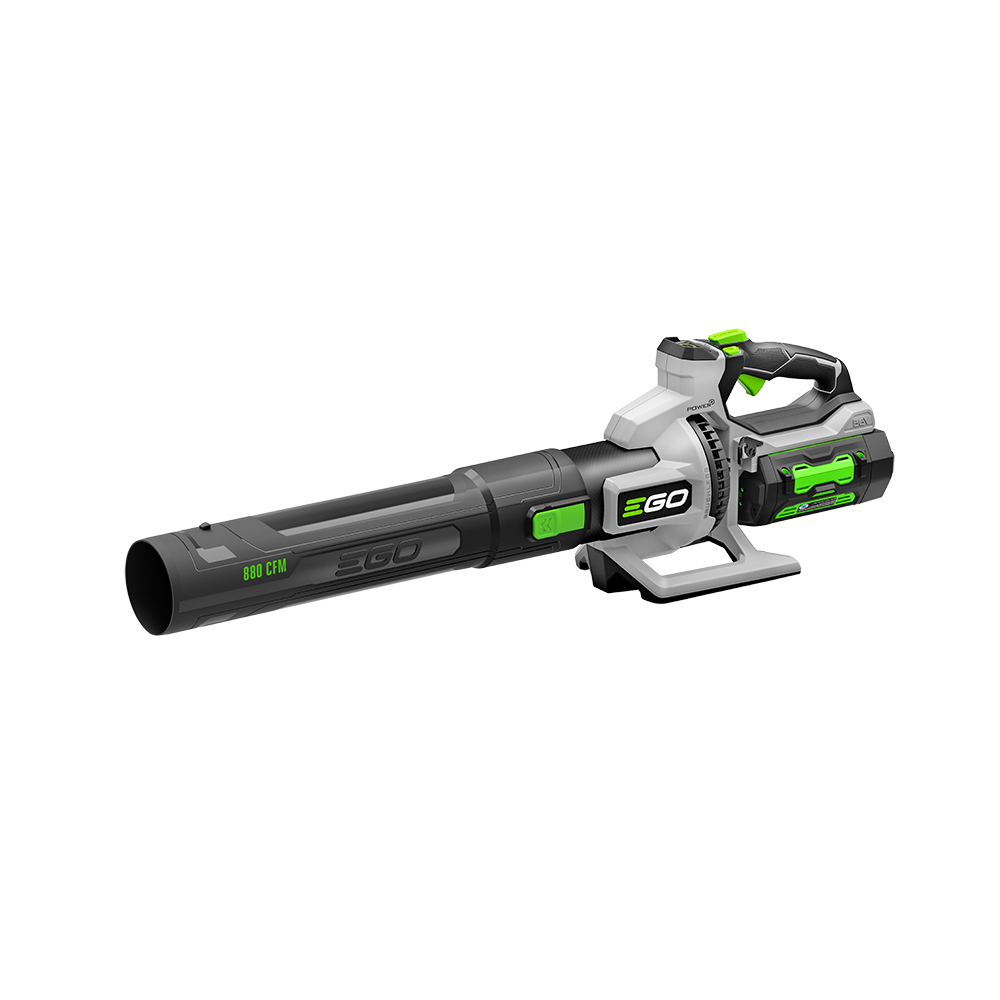
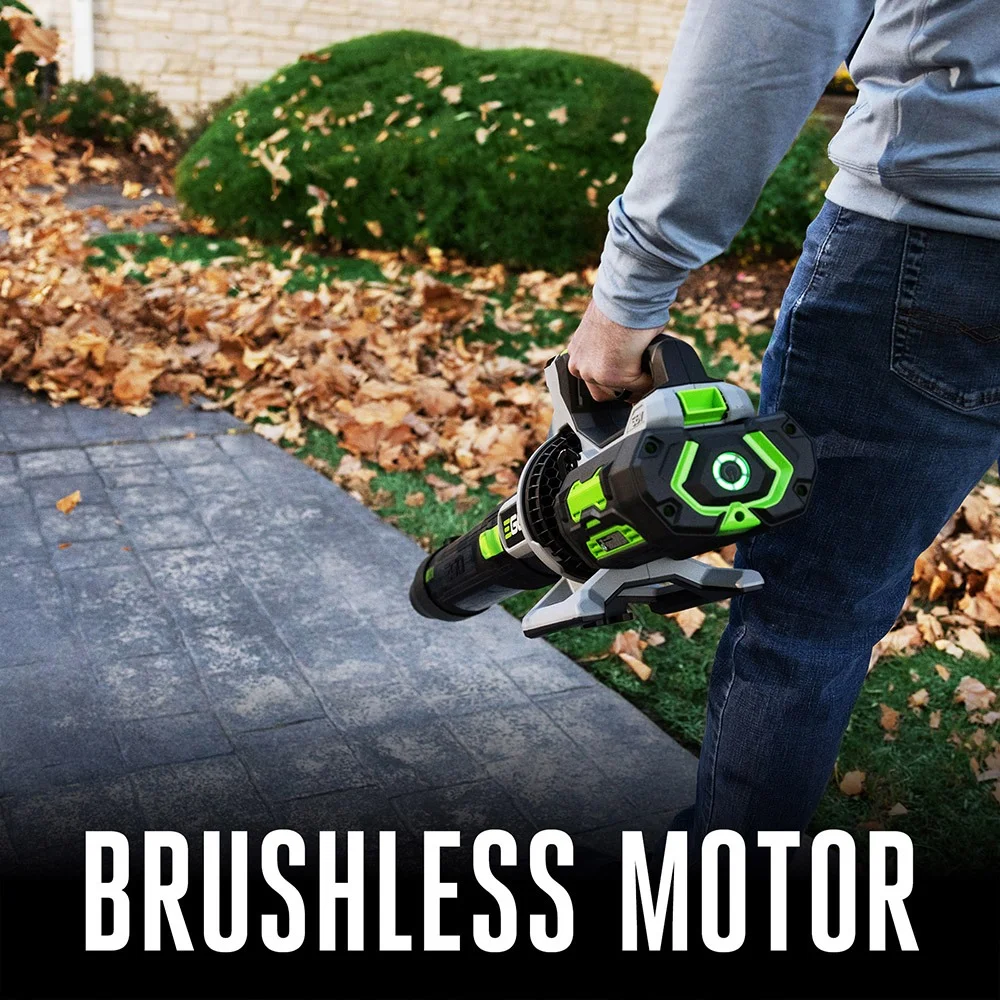
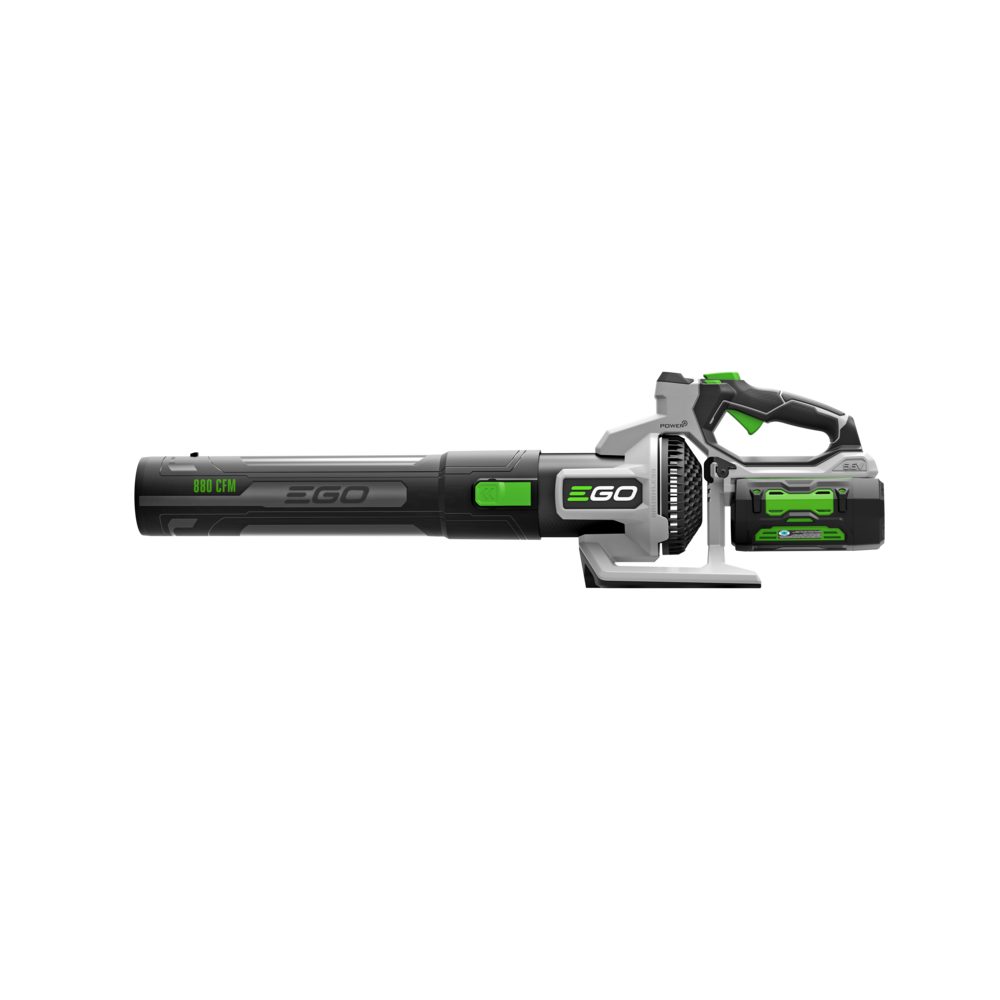
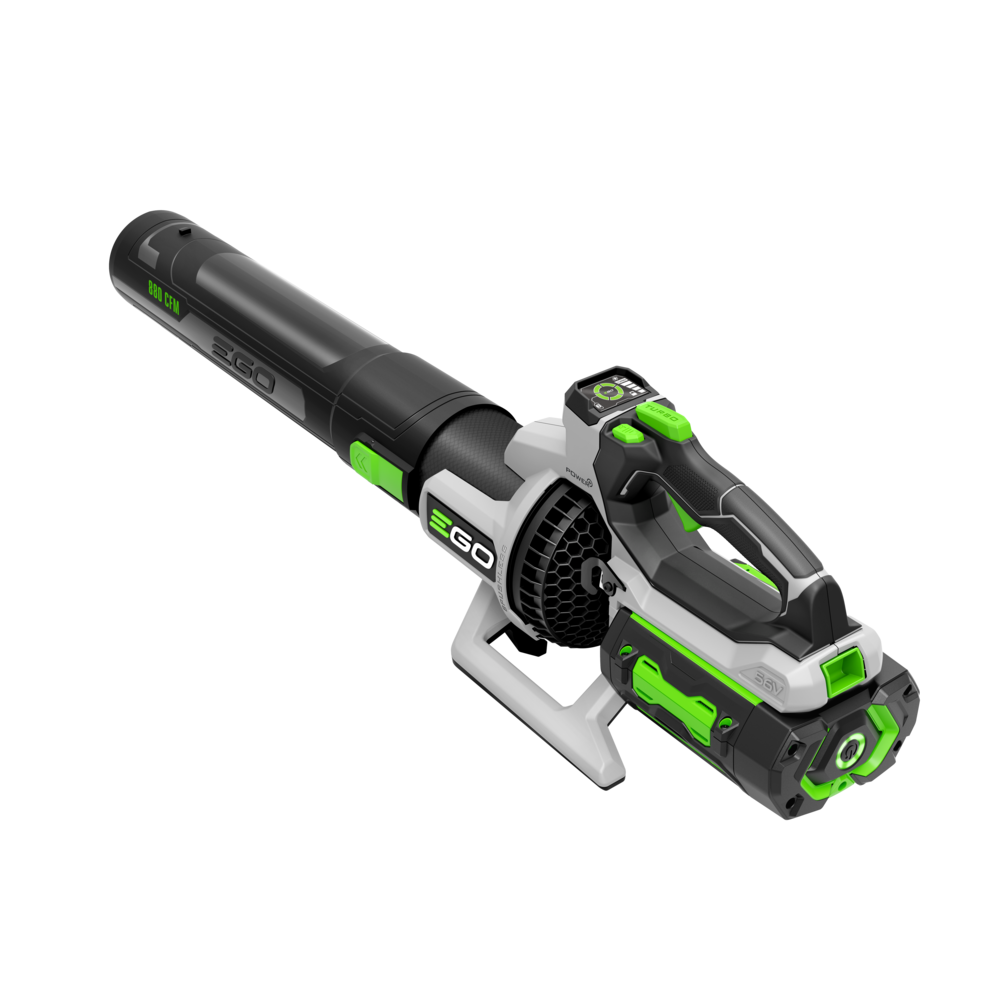
The EGO LB8800 56V Backpack Blower is a 56V handheld blower that EGO calls its most powerful handheld model. It’s rated at up to 880 CFM and 200 MPH, with a brushless motor, a carbon-fiber body, a digital display, a speed-lock button, and a turbo button. The bare tool weighs just 4.9 lb, and EGO rates its blowing force at up to 30 N.
This EGO LB8800 56V high-output blower review looks past those headline numbers. Independent testing found that the force you actually get depends heavily on the battery: 19.8 N with the 4.0Ah pack in the kit, and 29.4 N with a 12.0Ah pack. I also cover what’s in the box, runtime, the controls, upkeep, troubleshooting, and how the LB8800 compares with EGO’s other high-output blowers.
Yes, if you have a large property and are willing to buy a bigger battery. The LB8800 measured 19.8 N in turbo with the 4.0Ah battery that ships in the kit, but 24.3 N with a 7.5Ah pack and 29.4 N with a 12.0Ah pack, so battery choice sets how much of its power you can use. Look elsewhere if you plan to stay on a 4.0Ah or 5.0Ah battery: Pro Tool Reviews says the EGO LB7650 gives higher force on those packs. Runtime is short too, at about 12 minutes on high and 8 in turbo on a 4.0Ah battery per EGO.
Verdict Summary
Best for large yards and EGO owners with big batteries
- Best for: homeowners with large properties, heavy leaf loads, or wide driveways, especially those who already own EGO 56V batteries of 5.0Ah or more
- Standout strength: a light 4.9 lb tool that reached 29.4 N with a 12.0Ah battery in independent testing, plus a digital display and a speed-lock button
- Biggest weakness: performance depends on the battery, and the kit’s 4.0Ah packs give about 8 minutes in turbo per EGO
- Skip it if: you have a small yard, want long turbo runtime, or need a blower rated for professional use
Score basis: raised by the measured force on large batteries, the low bare-tool weight, the digital display, and the 5-year tool warranty; lowered by the short runtime on the kit batteries, the gap between EGO’s 30 N claim and the 19.8 N measured on the kit battery, the weight once a large battery is fitted, and the household-use rating. It’s an editorial judgment, not a lab score, and it isn’t based on hands-on testing.
📊 Full Specifications
Core specs
| Spec | Value | Source |
|---|---|---|
| Model and versions | LB8800 (tool only) and LB8803-2 (kit). A “-FC” suffix is the Canadian version | EGO |
| Voltage | 56 V | EGO manual |
| Motor and fan | High-efficiency brushless motor with a turbine-style fan | EGO |
| Body | Carbon fiber | EGO |
| Max air volume | 880 CFM (1,495 m³/h) in turbo | EGO manual |
| Variable-speed range | About 270 to 700 CFM with the trigger | EGO US page; Pro Tool Reviews |
| Max air speed | 200 MPH (89 m/s), with the tapered nozzle attached in turbo | EGO manual and US page |
| Max blowing force | 30 N rated by EGO. Measured 19.8 N (4.0Ah), 24.3 N (7.5Ah), 29.4 N (12.0Ah) by Pro Tool Reviews | EGO manual; Pro Tool Reviews |
| Controls | Variable-speed trigger, turbo button (hold the trigger, then press), speed-lock button, and an LCD screen | EGO manual |
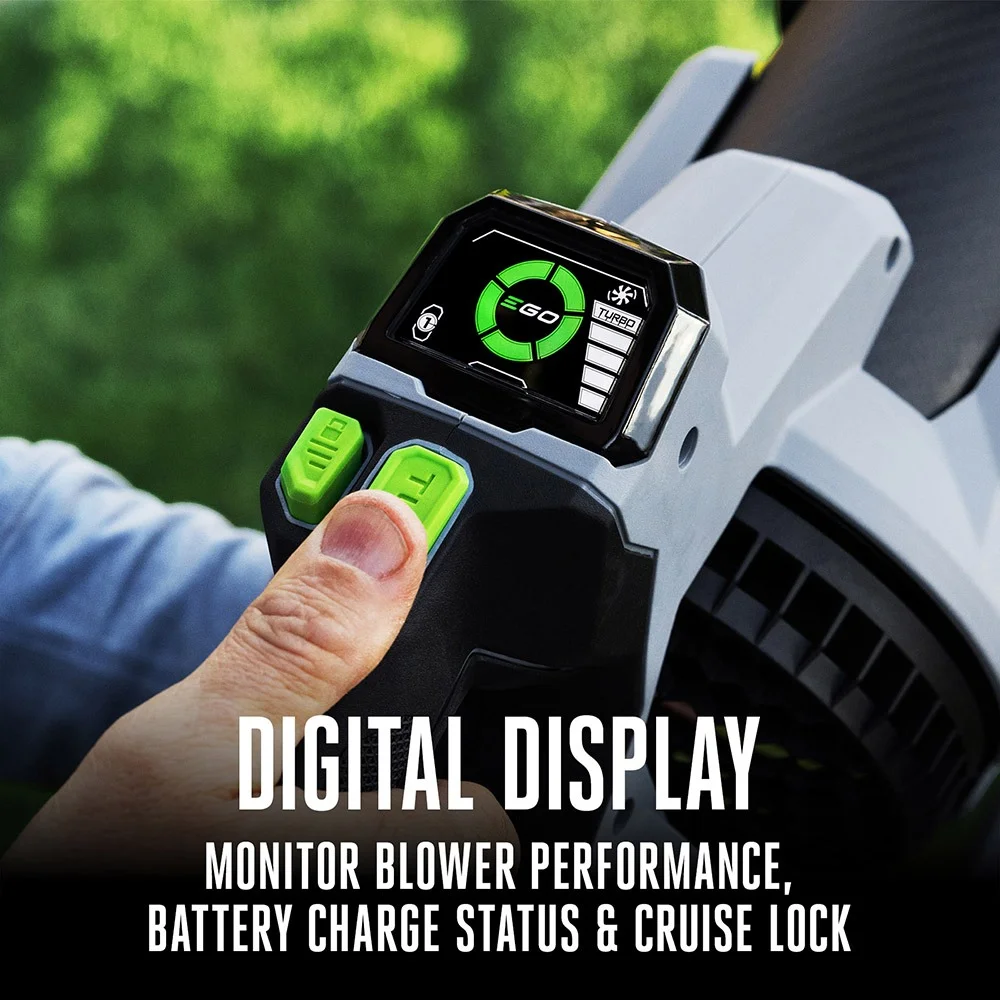
| LCD screen | Shows battery fuel gauge, battery icon, air-speed bars, turbo indicator, fan icon, and speed-lock icon. Turns off 1 minute after the trigger is released | EGO manual |
| Compatible batteries | BA1400, BA2800, BA4200, BA1400T, BA2242T, BA2800T, BA3360T, BA4200T, BA4480T, BA5600T, BA6720T. EGO recommends 4.0Ah or larger. Packs below 4.0Ah limit the air speed to two bars | EGO manual |
| Compatible chargers | CH2100, CH3200, CH5500, CH2800D, CH7000, CH7000T | EGO manual |
| Bare tool weight | 4.9 lb (2.2 kg) | EGO manual; Pro Tool Reviews |
| Weight with 4.0Ah battery | About 9.7 lb | Pro Tool Reviews |
| Length | About 35 in without nozzles | Pro Tool Reviews |
| Weather protection | IPX4 (protection from splashing water), rated for the blower and battery used together | EGO manual |
| Temperature range | Operating 5°F to 104°F (−15°C to 40°C); storage −4°F to 158°F (−20°C to 70°C) | EGO manual |
| Accessories | Shoulder strap (AP1500), gutter cleaning attachment kit (AGC1000), short tube attachment (AST2000) | EGO manual |
| Storage | Wall-mount slot on the base | EGO manual |
| Intended use | Household use | EGO manual |
| Warranty | 5-year limited on the tool and 3-year limited on the batteries, per EGO’s US page | EGO US page |
Figures that vary by source or region
These are the numbers where sources disagree or only apply to one market. I show each one instead of picking a winner.
| Spec | What sources say | Why it differs |
|---|---|---|
| Max airflow | 880 CFM (1,495 m³/h) per EGO. A Canadian retailer lists 847.55 CFM (24.0 m³/min) | Conversion or rounding. EGO’s figure is the reference |
| Blowing force | 30 N claimed by EGO. Pro Tool Reviews measured 19.8 N on turbo with the kit’s 4.0Ah battery and 18.5 N on high | Manufacturer claim vs. independent test. Battery size matters |
| “90 minutes” runtime | EGO’s page says up to 90 minutes average runtime with two 4.0Ah batteries. Pro Tool Reviews describes it as about 45 minutes per battery on low. EGO’s manual lists 80 minutes on low per battery | Different wording and conditions. Treat 90 minutes as a light-use average, not turbo |
| Package weight | 4.9 lb bare tool and about 9.7 lb with a 4.0Ah battery. Dealer pages show 21 to 23 lb | The dealer figures are shipping weights for the boxed kit |
| Noise | EGO publishes no decibel figure on the pages I checked. One retailer lists “0 dB” | A blank or placeholder value. The manual calls for hearing protection |
| Tool-only contents | EGO’s manual packing list names the blower, tube, both nozzles, shoulder strap, and manual. Some dealers list nozzles and strap with the bare tool | Listing wording varies. Confirm what your listing includes |
| 4.0Ah battery version | EGO’s manual names the BA2242T as the recommended 4.0Ah pack. A reader comment on Pro Tool Reviews says an older BA2240T exists and may deliver less current | The reader’s claim is unverified. Pro Tool Reviews said it used the latest generation |
| Price | $299 bare tool and $439 kit when reviewed. Dealers show $439 to $439.99 for the kit and $379 on sale | Dealer pricing, promotions, and date |
💨 Power and Airflow: What 880 CFM and 30 N Really Mean
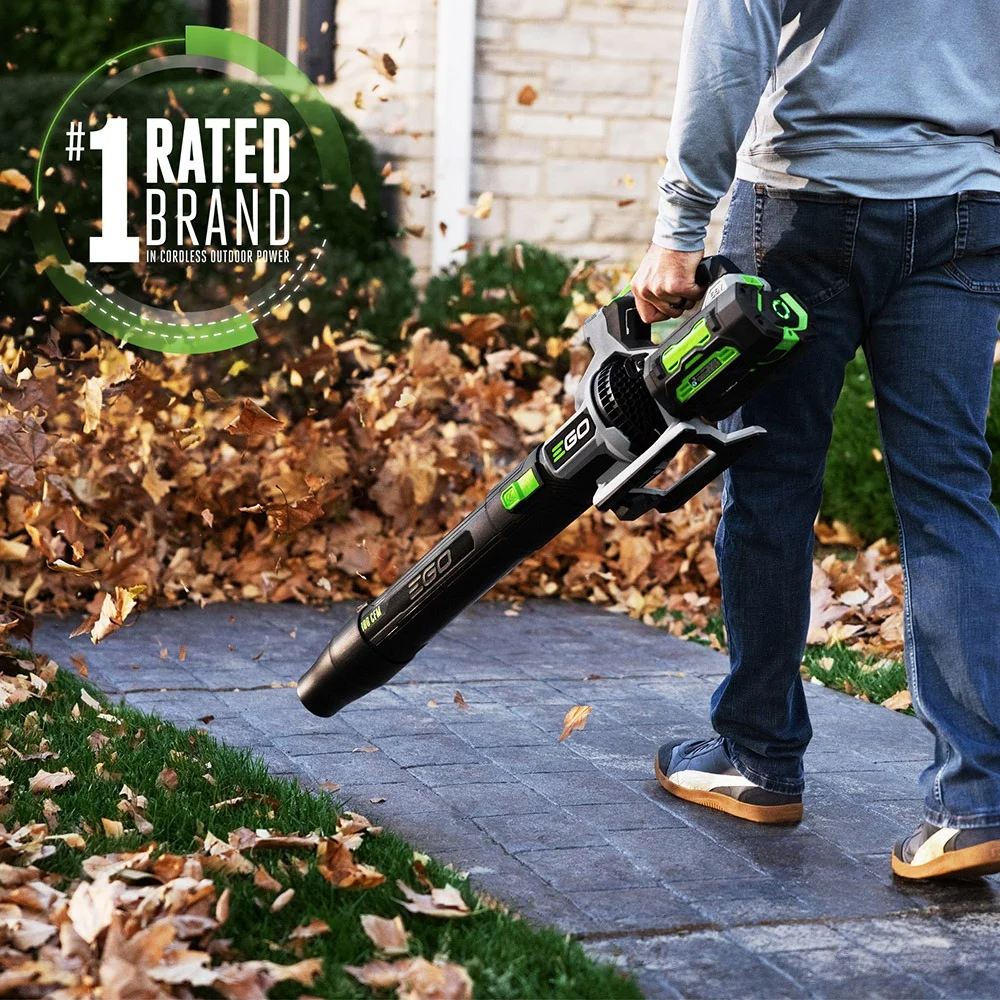
CFM and MPH sell blowers, but blowing force in newtons says more about how a blower handles a heavy pile. EGO’s manual rates the LB8800 at up to 30 N and 880 CFM, and its page says the turbo mode can power through wet leaves, rocks, mud, and snow. Pro Tool Reviews, which tests with a force meter, called 30 N a bold claim for a handheld and noted that even pro gas models peak around 15 N. Its measurements show the claim holds only with a very large battery:
| Battery used | Measured force (Pro Tool Reviews) |
|---|---|
| 4.0Ah (in the kit) | 19.8 N turbo (18.5 N on high) |
| 7.5Ah | 24.3 N |
| 12.0Ah | 29.4 N |
Pro Tool Reviews tested in warm, humid conditions that affect results compared with a lab. Results reflect that review’s setup and aren’t guaranteed for every unit, battery, or yard.
EGO’s claim vs. measured blowing force (newtons)
The takeaway is that battery capacity does two jobs here. It sets how long the blower runs, and it also sets how much force you can reach. EGO’s own manual says packs below 4.0Ah limit the air speed to two bars on the display. Pro Tool Reviews’ advice is blunt: buy the LB8800 if you’re willing to carry a bigger battery, and if you’d rather stick with a 4.0Ah or 5.0Ah pack, the LB7650 gives higher blowing force.
Three power levels plus turbo
The trigger is variable, and the air-speed bars on the LCD show where you are. EGO lists a range of about 270 to 700 CFM with the trigger, then 880 CFM in turbo. To use turbo, hold the trigger and press the turbo button. The blower returns to its previous speed when you release it, so turbo is a burst tool, not a cruising speed.
Tapered nozzle vs. spread nozzle
EGO’s manual says the tapered nozzle concentrates the airflow and increases the air speed. The spread nozzle spreads the airflow and widens the cleaning area. The 200 MPH rating applies only with the tapered nozzle attached in turbo. For a heavy pile, I’d start with the tapered nozzle, and use the spread nozzle for open driveways and finishing passes, which is my inference from EGO’s descriptions.
If you’re comparing options, the current Amazon listing shows what’s bundled.
🔑 How to Set Up, Start, and Use the LB8800
This summarizes the steps in EGO’s operator’s manual for the LB8800. Read the full manual before first use.
- Fully charge the battery before first use. EGO recommends the 4.0Ah BA2242T or any larger EGO 56V battery for best performance.
- Remove the battery, then fit the tube. Align the groove in the tube with the peg on the blower housing and push until the latch snaps. To remove it, press and hold the tube-release button and pull the tube straight out.
- Fit a nozzle the same way: align its groove with the peg on the tube and push until it snaps. Use the nozzle-release button to remove it.
- Clip the shoulder strap’s carabiner to the strap hanger and adjust the length. In an emergency, take the strap off your shoulder immediately.
- Install the battery by aligning its ribs with the mounting slots and pressing it in until it snaps. Make sure the latch is seated before you start. The battery icon lights when the blower is on, and the fuel gauge shows the charge.
- Squeeze the air-speed trigger to start. More pressure gives more speed, and the LCD shows the speed bars. The screen turns off 1 minute after you release the trigger.
- For turbo, hold the trigger and press the turbo button. The turbo indicator and fan icon light up, and the blower returns to the previous speed when you release the button.
- For speed lock, bring the trigger to the speed you want, press the speed-lock button, then release the trigger. Press the button again to release the lock, which also turns the blower off.
Cold weather. The manual says the blower may not start properly if the battery or blower is at −4°F (−15°C) or colder. Take the battery out, let both warm up indoors for 10 minutes or more, then try again. The troubleshooting table also suggests starting at low speed without turbo after a cold start. Storage. Remove the battery, and use the wall-mount slot with a hook strong enough to hold the blower.
🔋 Battery, Runtime, and What You’re Buying Into
The LB8800 takes EGO’s 56V ARC Lithium batteries. A 4.0Ah pack stores about 224 Wh (4.0Ah × 56V, the convention EGO uses for its other packs). These are EGO’s approximate runtimes with one 4.0Ah battery, from the manual:
| Setting | Runtime (one 4.0Ah battery) | Rough average power (theoretical) |
|---|---|---|
| Low | About 80 min | about 170 W |
| High | About 12 min | about 1,120 W |
| Turbo | About 8 min | about 1,680 W |
The power column is a rough theoretical average: 224 Wh divided by EGO’s runtime estimate. Real motor draw differs, so don’t read it as a measurement. Runtimes assume a fresh, full battery.
EGO runtime estimates with one 4.0Ah battery (minutes)
Pro Tool Reviews measured 12 minutes 35 seconds on high with a 4.0Ah battery, which agrees with EGO’s figure. It also noted that turbo is meant for short bursts, so it wasn’t troubled by the 8-minute estimate. In plain terms, turbo draws about ten times the power of low, which is why the battery empties so quickly.
About the “90 minutes” claim. EGO’s page says up to 90 minutes of average runtime with the two 4.0Ah batteries in the kit. That is a light-use average. If you spend your time on high or turbo, plan around the 12-minute and 8-minute figures per battery instead.
Bigger batteries. Larger packs raise both runtime and measured force, but they add weight. The manual lists compatible packs up to the 10Ah-class BA5600T and the BA6720T, so confirm any pack with EGO before you buy. With a 4.0Ah battery fitted, Pro Tool Reviews weighed the blower at about 9.7 lb, and a 12.0Ah pack would weigh more. Handling is the trade-off for power.
Charging. The kit includes the 320W charger (CH3200), and the manual lists other compatible chargers up to the CH7000 series. Charge times aren’t given in the manual, so check EGO’s charger pages for your battery size.
Cost. Pro Tool Reviews listed $299 for the bare tool and $439 for the kit with two 4.0Ah batteries and a charger. Dealers I saw show $439 to $439.99 for the kit, and $379 on sale. If you already own 5.0Ah or larger EGO batteries, the bare tool is the cheaper way in. Prices change, so check the Amazon listing and budget for batteries if you buy the tool only.
🛠️ Maintenance and Storage
A battery blower needs far less upkeep than a gas one. EGO’s manual lists only the items below. The intervals are mine where the manual gives none.
| Item | What to do | When |
|---|---|---|
| Battery | Remove it before cleaning, assembling, adjusting, or any maintenance, and whenever the blower isn’t in use | Every time |
| Whole tool | Check for damaged, missing, or loose parts, including screws, nuts, bolts, and caps. Don’t operate with damaged or missing parts | Before each use |
| Battery seating | Make sure the latch snaps into place and the battery is secure before starting | Every time |
| Air inlet | Keep it clear of debris. A blocked inlet reduces air speed, and the manual says to clean inlets before storage | As needed, and before storage |
| Plastic parts | Wipe with a clean cloth. Avoid solvents, and keep brake fluid, gasoline, petroleum products, and penetrating oils off the plastic | When cleaning |
| Fan | Don’t touch the fan while it moves. Turn the blower off and wait until the fan stops before removing any part that gives access to it | Always |
| Repairs | Use a qualified technician at an EGO service center and identical replacement parts. Don’t modify the tool or create your own accessories | If problems |
| Storage | Remove the battery, clean the air inlets, and store in an enclosed space away from children, garden chemicals, and de-icing salts. A wall-mount slot is built in | Between seasons |
Warranty details
EGO’s US page lists a 5-year limited tool warranty and a 3-year limited battery warranty. EGO’s manual says the warranty applies only to the original purchaser from an authorized EGO retailer, can’t be transferred, and is void for rental use. It doesn’t cover accident, misuse, modification, unauthorized repair, liquid contact, or normal wear. To make a claim, you present the original dated receipt. The manual lists EGO’s customer service line as 1-855-EGO-5656.
🔧 Troubleshooting Common Problems
These come from the troubleshooting table in EGO’s operator’s manual. If the fix isn’t listed or the problem returns, contact EGO customer service.
| Symptom | What the manual points to |
|---|---|
| Blower doesn’t work: no battery | Attach the battery pack to the blower |
| Blower doesn’t work: no contact | Remove the battery, check the contacts, and reinstall it |
| Blower doesn’t work: depleted | Charge the battery pack |
| Blower doesn’t work: too hot | Cool the battery and blower until they drop below 152°F (67°C) |
| Blower doesn’t work: too cold | Remove the battery and warm both indoors. Fully charge the battery, then start at low speed without turbo |
| Blower doesn’t work: trigger | If the air-speed trigger is damaged, contact EGO Customer Service for repair |
| Only two air-speed bars show | A battery below 4.0Ah is fitted. Use a 4.0Ah or larger pack |
| Speed lock won’t turn on or off | The speed-lock button may be damaged. Contact EGO Customer Service |
| Air speed noticeably reduced | The battery may be low, the air inlet blocked, or the motor fan worn. Charge the battery, remove the battery and clear debris, or contact EGO if the fan is worn |
| LCD not working properly | The screen or its wiring may be damaged. Contact EGO service |
| One fuel-gauge LED flashes | The battery charge is low. Charge the battery pack |
⚖️ Weight, Noise, Safety, and Use by Job
Weight and handling
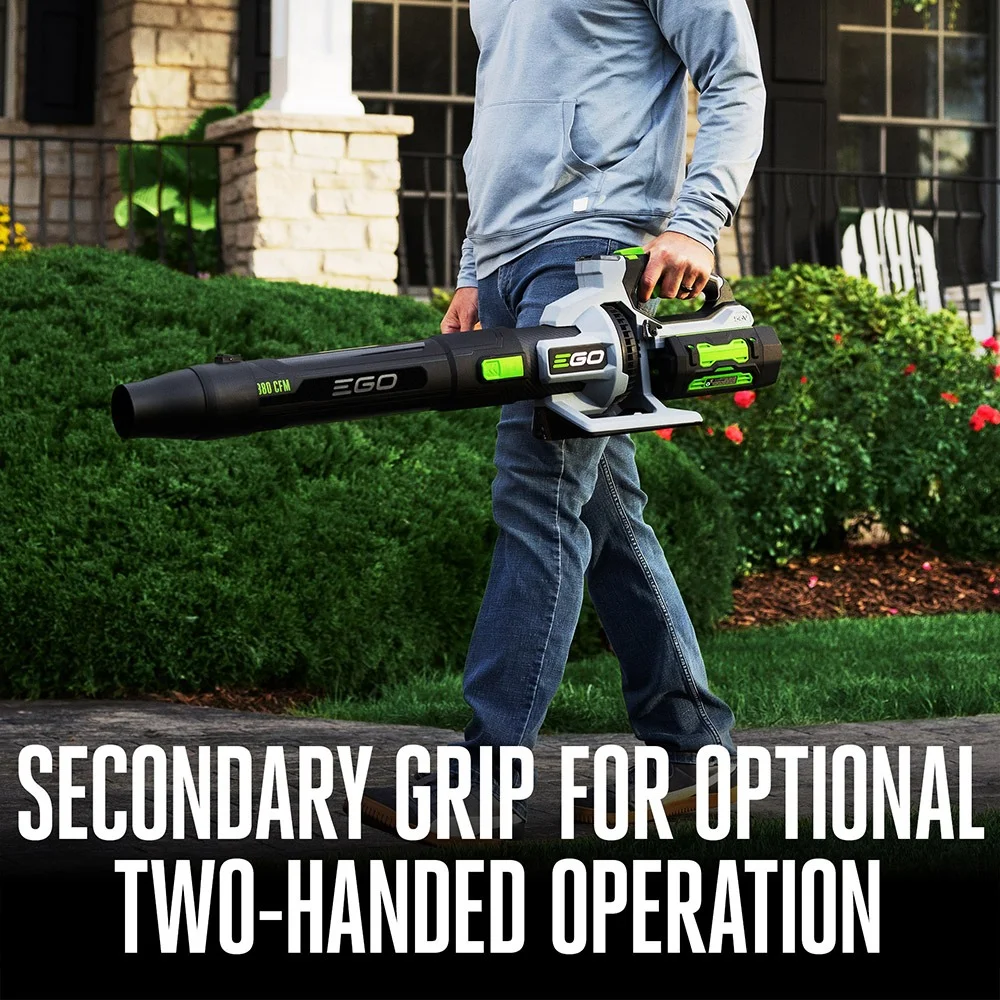
The bare tool weighs 4.9 lb, and Pro Tool Reviews weighed it at about 9.7 lb with a 4.0Ah battery. It called the design well balanced and lightweight, and the tool is about 35 in long without nozzles. EGO adds secondary grip zones for optional two-handed use and a shoulder strap that takes weight off your arm. This is the first EGO handheld blower with a carbon-fiber body and a digital display, per Pro Tool Reviews. I have no comfort data on a full afternoon with a 7.5Ah or 12.0Ah battery fitted.
Noise
EGO publishes no noise rating on the pages I checked, and one retailer’s “0 dB” entry is clearly a placeholder. EGO’s manual shows an ear-protection symbol and says to always wear hearing protection. A dealer review also noted a higher noise level at peak output. Noise rules vary by town, and this page can’t tell you whether the blower meets yours, so check your local ordinance.
Safety rules in the manual
- Wear eye protection marked ANSI Z87.1 and hearing protection
- Keep bystanders away, and never point the nozzle at people, pets, or windows
- Take extra care near trees, cars, and walls, since debris can ricochet
- Don’t blow anything burning or smoking, such as cigarettes, matches, or hot ashes
- Don’t touch the fan while it’s moving, and remove the battery before clearing a jam or servicing
- Don’t use it in bad weather, especially when there is a risk of lightning
- Wear non-slip footwear, tie back long hair, and avoid loose clothing that could be drawn into the air inlets
- Use only the batteries, chargers, and accessories EGO lists, and don’t use it for rental or professional work, since it’s intended for household use
Working technique from the manual
EGO suggests blowing around the outer edges of a pile and never straight into its center, loosening debris with a rake or broom first, slightly dampening dusty surfaces, and limiting the number of machines running at once to cut noise. It also says to watch for children, pets, open windows, and freshly washed cars.
What the numbers suggest, by job
These are reasoned from the specs, the manual, and Pro Tool Reviews’ test data, not from my own testing.
- Large lawns and leaf season: the airflow range and speed-lock button suit long passes, especially with a larger battery.
- Driveways, walkways, and decks: EGO lists these in the manual, and the spread nozzle widens the pass.
- Wet or matted leaves: expect to use turbo in short bursts. Force is higher on a 7.5Ah or 12.0Ah battery than on the kit’s 4.0Ah pack.
- Mulch beds and lawn edges: EGO lists clearing leaves from lawns and mulch beds, and a lower setting avoids scattering mulch.
- Gutters: EGO sells a gutter cleaning attachment (AGC1000) that its manual lists for this blower.
- Small yards and light debris: probably more blower than you need, and a lighter, cheaper model will do.
⚔️ How the LB8800 Compares
The first three rows come from Pro Tool Reviews’ comparison of EGO’s high-performance handhelds. Force figures for the LB6700 and LB7650 are manufacturer claims in that table, so they aren’t equivalent to the LB8800’s measured numbers. Treat the table as a rough guide.
| Blower | Airflow and speed | Force | Bare tool weight | Price |
|---|---|---|---|---|
| EGO LB8800 (this review) | 880 CFM, 200 MPH | 19.8 N on 4.0Ah; up to 29.4 N on 12.0Ah (claim: 30 N) | 4.9 lb | $439 kit when reviewed |
| EGO LB7650 | 765 CFM, 200 MPH | 26 N claimed; higher force than the LB8800 on 4.0Ah or 5.0Ah packs, per Pro Tool Reviews | 4.6 lb | $329 kit when reviewed |
| EGO LB6700 | 670 CFM, 180 MPH | 21 N claimed | 4.8 lb | $269 kit when reviewed |
| EGO LB6000 (backpack) | 600 CFM, 145 MPH | 19 N rated | 12.5 lb without battery | See our review |
| STIHL BG 86 (gas) | Up to 444 CFM, 154 to 190 MPH | 15 N rated | About 9.7 lb dry | See our review |
Choose the LB7650 if…
You plan to stay with a 4.0Ah or 5.0Ah battery. Pro Tool Reviews says you get higher force from the LB7650 on those packs, and its bare tool is 0.3 lb lighter.
Choose the LB8800 if…
You’re willing to carry a 7.5Ah or larger battery, or you already own one. That’s where the extra airflow and force show up, and the digital display and speed lock are nice extras.
Choose something else if…
You want a battery that’s built into the machine and a harness: see our EGO LB6000 review. For a smaller boxed kit, see our EGO LB5302 review. If you’d rather have gas power, see our STIHL BG 86 review.
⭐ Owner Feedback, Pros and Cons
I read dealer and marketplace comments and Pro Tool Reviews’ review and its reader comments. It’s a small, informal sample, so treat it as patterns I saw, not a survey. Owners say the blower moves leaves from places a weaker blower struggled, and several praise the display and light body. The clearest caution is battery size: one buyer who bought the bare tool to use 2.5Ah batteries they already owned titled their comment “Use a Strong Enough Battery!”, which fits the manual’s two-bar limit below 4.0Ah. A Pro Tool Reviews reader also questioned whether the kit’s 4.0Ah batteries can reach EGO’s stated specs. The points below are my analysis of the specs and sources above:
- 880 CFM and 200 MPH ratings, EGO’s highest for a handheld
- Measured 29.4 N with a 12.0Ah battery
- Light 4.9 lb bare tool with a carbon-fiber body
- Digital display with fuel gauge, speed bars, and speed lock
- Turbo button and a 270 to 700 CFM trigger range
- Tapered and spread nozzles, plus a shoulder strap
- Gutter and short-tube attachments available
- 5-year tool warranty and 3-year battery warranty
- Performance depends on battery size: 19.8 N on 4.0Ah vs. 29.4 N on 12.0Ah
- About 8 minutes in turbo and 12 on high with a 4.0Ah battery
- About 9.7 lb with a 4.0Ah battery, and more with larger ones
- Packs below 4.0Ah limit the display to two speed bars
- EGO’s US page shows “coming soon” for both versions
- Household use only, per the manual
- No noise rating published
🎯 Who Should Buy It
Buy it if:
- You have a large property and a lot of leaves or wide paved areas
- You already own EGO 7.5Ah or 12.0Ah batteries, or you’ll buy one
- You want a digital display and a speed-lock button
- You can accept a household-use rating
Skip it if:
- You have a small yard or only light debris
- You’ll stay on 2.5Ah to 5.0Ah batteries. The EGO LB7650 gives more force on those packs
- You need long runtime in turbo without swapping batteries
- You need a blower for paid work. EGO has a separate commercial line
❓ EGO LB8800 FAQ
Is the EGO LB8800 worth buying?
It’s worth it for large properties if you’re willing to use a 7.5Ah or larger battery. On the kit’s 4.0Ah batteries it measured 19.8 N in turbo, and Pro Tool Reviews says the LB7650 gives higher force on 4.0Ah or 5.0Ah packs.
How powerful is the EGO LB8800?
EGO rates it at up to 880 CFM, 200 MPH, and 30 N of blowing force. Pro Tool Reviews measured 19.8 N in turbo on a 4.0Ah battery, 24.3 N on a 7.5Ah battery, and 29.4 N on a 12.0Ah battery.
Does the EGO LB8800 come with a battery and charger?
The LB8800 is the tool-only model. The LB8803-2 kit adds two 4.0Ah batteries and a 320W charger. EGO’s packing list names the blower, tube, both nozzles, strap, and manual, but listings vary, so check yours.
How long does the LB8800 run on one battery?
EGO’s manual estimates about 80 minutes on low, 12 on high, and 8 in turbo with one 4.0Ah battery. Pro Tool Reviews measured 12 minutes 35 seconds on high. EGO’s “up to 90 minutes” is an average with two batteries.
Does a bigger battery make the LB8800 stronger?
Yes, in independent testing. Pro Tool Reviews measured 19.8 N with a 4.0Ah battery, 24.3 N with a 7.5Ah battery, and 29.4 N with a 12.0Ah battery. Larger batteries also add weight.
Which batteries work with the LB8800?
EGO’s manual lists the BA1400, BA2800, BA4200, BA1400T, BA2242T, BA2800T, BA3360T, BA4200T, BA4480T, BA5600T, and BA6720T. It recommends 4.0Ah or larger, and packs below 4.0Ah limit the air speed to two bars.
How much does the EGO LB8800 weigh?
4.9 lb (2.2 kg) as a bare tool. Pro Tool Reviews weighed it at about 9.7 lb with a 4.0Ah battery.
How loud is the EGO LB8800?
EGO doesn’t publish a noise rating on the pages I checked. The manual calls for hearing protection, and a dealer review noted higher noise at peak output. Check your local noise rules.
Is the EGO LB8800 waterproof?
No. EGO lists IPX4, which means protection from splashing water, for the blower and battery used together. It doesn’t mean submersion or hosing is safe.
Can the LB8800 move wet leaves, mud, and snow?
EGO says turbo mode is made for heavy debris such as wet leaves, rocks, mud, and snow. Results depend on how wet and packed the material is, and heavy piles may need several passes.
What’s the difference between the LB8800 and the LB7650?
The LB8800 has more rated airflow (880 vs. 765 CFM) and a display, but the LB7650 is 0.3 lb lighter. Pro Tool Reviews says the LB7650 gives higher force on 4.0Ah or 5.0Ah packs, while the LB8800 pulls ahead only with larger batteries.
Can I use the LB8800 for professional work?
EGO’s manual says the blower is intended for household use, so for paid work look at EGO’s commercial line or confirm warranty terms with EGO.
Will the LB8800 start in cold weather?
It may not start properly at −4°F (−15°C) or colder. EGO says to warm the battery and blower indoors for 10 minutes or more, and the troubleshooting table suggests starting at low speed without turbo.
What warranty does the LB8800 have?
EGO’s US page lists a 5-year limited tool warranty and a 3-year limited battery warranty. It applies to the original purchaser from an authorized EGO retailer, so check the seller.
🏆 Final Verdict: Is the EGO LB8800 Worth It?
The EGO LB8800 is a powerful, light handheld blower with a very capable top end. With a 12.0Ah battery it measured 29.4 N in independent testing, which is remarkable for a handheld. What holds it back is that the battery that comes in the kit gives about 20 N and 8 minutes of turbo, so the headline numbers need a larger battery.
If you have a large property and can add a 7.5Ah or bigger pack, it fits well. If you’d stay on 4.0Ah or 5.0Ah batteries, compare the EGO LB7650 first. If it fits how you work, you can check the latest price, what’s included, and what other buyers say on Amazon.
📸 EGO LB8800 Photos
Click to see full view
📚 More Blower Reviews
EGO LB6000 600 CFM 56V Cordless Leaf Blower Review
A cordless backpack blower with the battery on board.
EGO LB5302 56V 530 CFM Leaf Blower: Specs, Pros & Cons
A boxed cordless kit with a battery and charger, and measured force.
STIHL BG 86 Handheld Blower Review: Specs, Pros & Cons
A professional gas handheld with no battery limits.
✅ Before You Buy: Quick Checklist
A few details vary by seller, so it’s worth a minute on the listing to confirm:
- The version: LB8800 (tool only) or LB8803-2 (kit with two 4.0Ah batteries and a 320W charger)
- Battery size: the pack you’ll actually use, since 4.0Ah or larger is needed for the full speed range
- Nozzles and strap: both nozzles and the shoulder strap should be included
- The seller: an authorized EGO retailer, since the warranty applies to authorized retailers
- Current price and availability, since EGO’s own page shows “coming soon”
Affiliate Disclosure: BestLeafBlowerCordless.com is a participant in the Amazon Services LLC Associates Program, an affiliate advertising program designed to provide a means for sites to earn advertising fees by advertising and linking to Amazon.com. As an Amazon Associate, we earn from qualifying purchases.