Gas Handheld Blower Review
STIHL BG 86 Handheld Blower Review: Specs, Pros & Cons
As an Amazon Associate, I earn from qualifying purchases at no extra cost to you.
⚡ Overview: STIHL’s Strongest Gas Handheld, and Not a Cordless
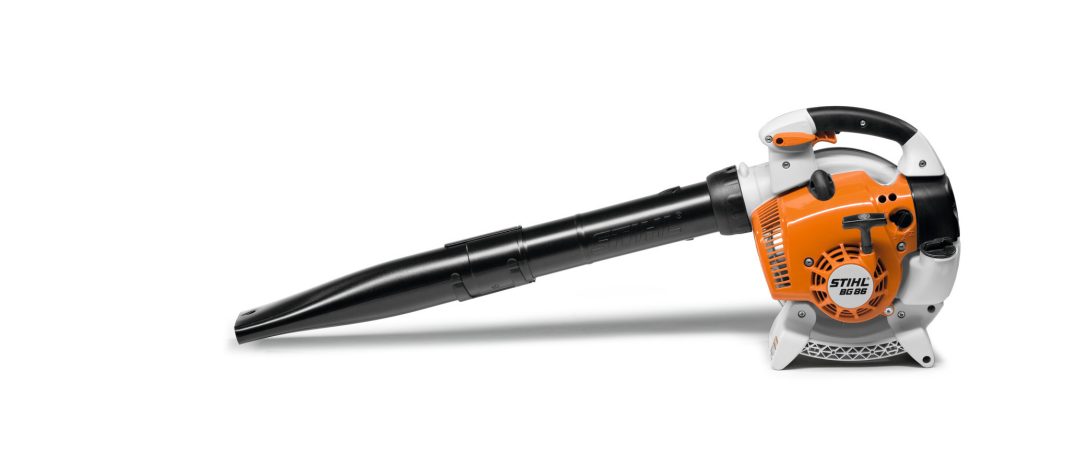
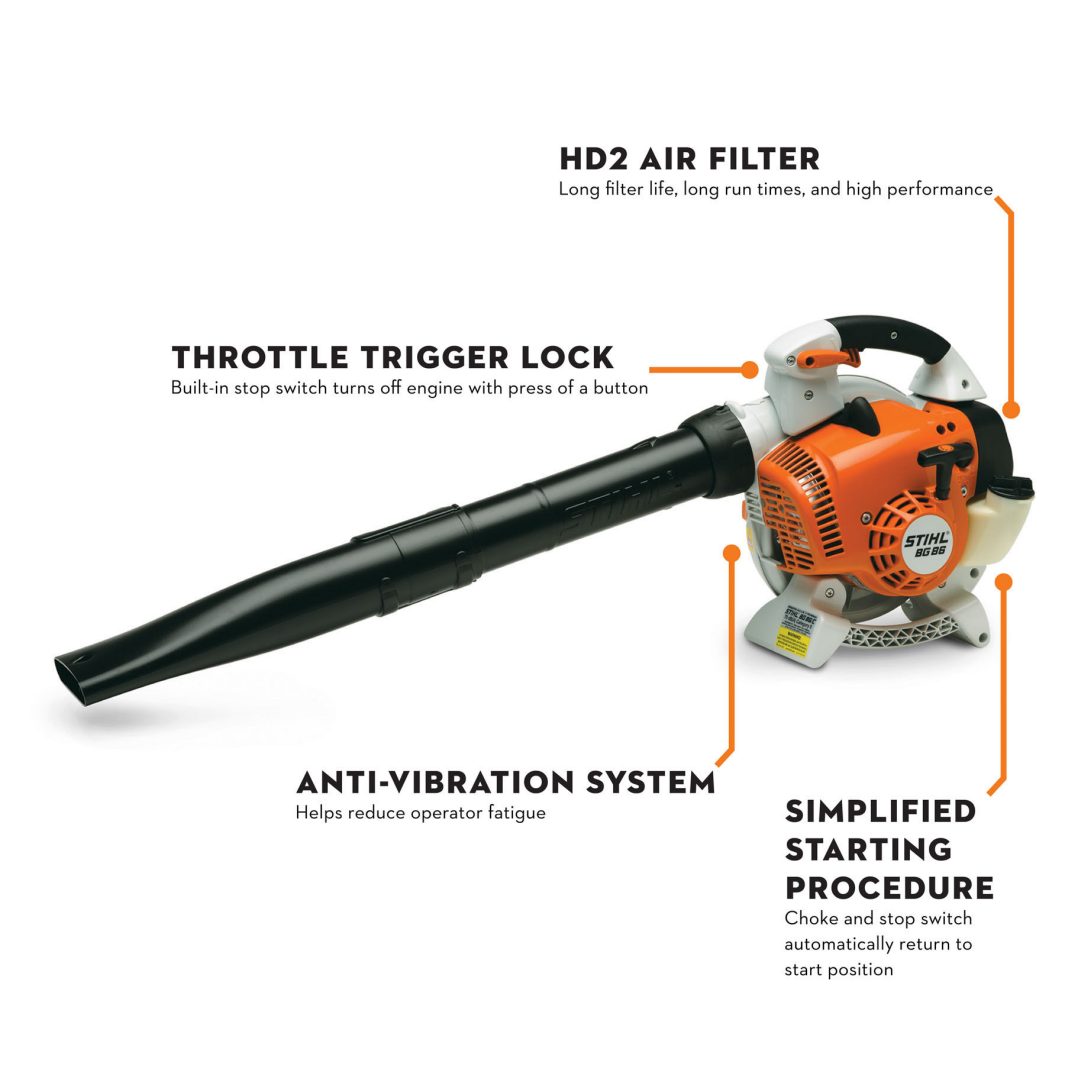
The STIHL BG 86 is a gas-powered handheld blower with a 27.2 cc two-stroke engine. STIHL’s dealers call it the most powerful gas handheld in the lineup, and it ships with both a round and a flat (fan) nozzle. It’s aimed at professionals, with a four-spring anti-vibration system, a throttle lock with a built-in stop switch, a purge-pump primer, and an HD2 air filter that dealers describe as washable.
Because this site is about cordless blowers, here’s the key point up front: the BG 86 runs on mixed fuel, not a battery. STIHL’s battery-powered equivalent is the BGA 86, which carries the same 15 N force rating. This STIHL BG 86 handheld blower review covers everything a buyer needs: specs, how to start and fuel it, maintenance, troubleshooting, and how it compares with its STIHL siblings and with cordless blowers.
Yes, if you want a professional gas handheld and can live with mixed fuel and engine noise. STIHL rates it at 15 N of blowing force, the top figure among its gas handhelds, with a 27.2 cc two-stroke engine, a 440 cc tank, round and fan nozzles, and a low 2.5 m/s² right-handle vibration figure in STIHL’s manual. It weighs about 9.7 lb dry. Choose the BGA 86 instead if you want the same 15 N rating with a battery, or a backpack blower if you need heavy-debris force.
Verdict Summary
Best for pros and big-yard owners who want a gas handheld
- Best for: landscapers and owners of large properties who want a handheld with no battery to charge or swap
- Standout strength: a 15 N rating, the top figure among STIHL’s gas handhelds, and much lower handle vibration than the BG 56 in STIHL’s manual
- Biggest weakness: it’s a gas machine: mixed fuel, engine noise and fumes, and 9.7 lb in your hand before fuel
- Skip it if: you want a cordless, quiet tool, live where gas blowers are restricted, or need more force than a handheld gives
Score basis: raised by the 15 N rating, the low vibration figure, the control and starting features, and unlimited runtime with a fuel can; lowered by the weight, the engine noise, dealer-only sales, ongoing two-stroke maintenance, and the fact that I found no independent force test. It’s an editorial judgment, not a lab score, and it isn’t based on hands-on testing.
📊 Full Specifications
Core specs
| Spec | Value | Source |
|---|---|---|
| Power source | Gas, single-cylinder two-stroke engine | STIHL manual |
| Displacement | 27.2 cc (1.66 cu in); bore 34 mm, stroke 30 mm | STIHL manual |
| Engine power | 0.8 kW (1.1 bhp) to ISO 7293 | STIHL manual |
| Idle speed | 2,500 rpm | STIHL manual |
| Ignition | Electronic magneto ignition | STIHL manual |
| Spark plug | NGK CMR 6 H, resistor type, electrode gap 0.5 mm | STIHL manual |
| Carburetor | All-position diaphragm carburetor with integral fuel pump | STIHL manual |
| Fuel | 50:1 gasoline and two-stroke oil, 90 octane minimum | STIHL manual |
| Fuel tank | 440 cc (14.9 oz) | STIHL manual; dealers |
| Blowing force | 15 N, round nozzle | STIHL manual; dealers |
| Air speed (average) | Round 63 m/s (141 MPH); fan nozzle 74 m/s (166 MPH) | STIHL manual; dealers |
| Air speed (maximum) | Round 76 m/s (about 170 MPH) per the manual; dealers list round 69 m/s (154 MPH) and flat 85 m/s (190 MPH) | STIHL manual; dealers |
| Air volume | Round 755 m³/h (444 CFM); fan nozzle 620 m³/h (365 CFM); up to 810 m³/h without the tube | STIHL manual; dealers |
| Weight (dry) | 4.4–4.5 kg (9.7–9.9 lb) depending on equipment | STIHL manual; dealers |
| Controls | Throttle trigger, setting lever that locks the trigger and stops the engine, choke knob, manual fuel pump bulb | STIHL manual |
| Comfort | Four-spring anti-vibration system, soft-grip handle | STIHL dealers |
| Air filter | Dealers describe HD2 as washable; the manual lists flat and pleated versions with different cleaning rules | STIHL dealers; manual |
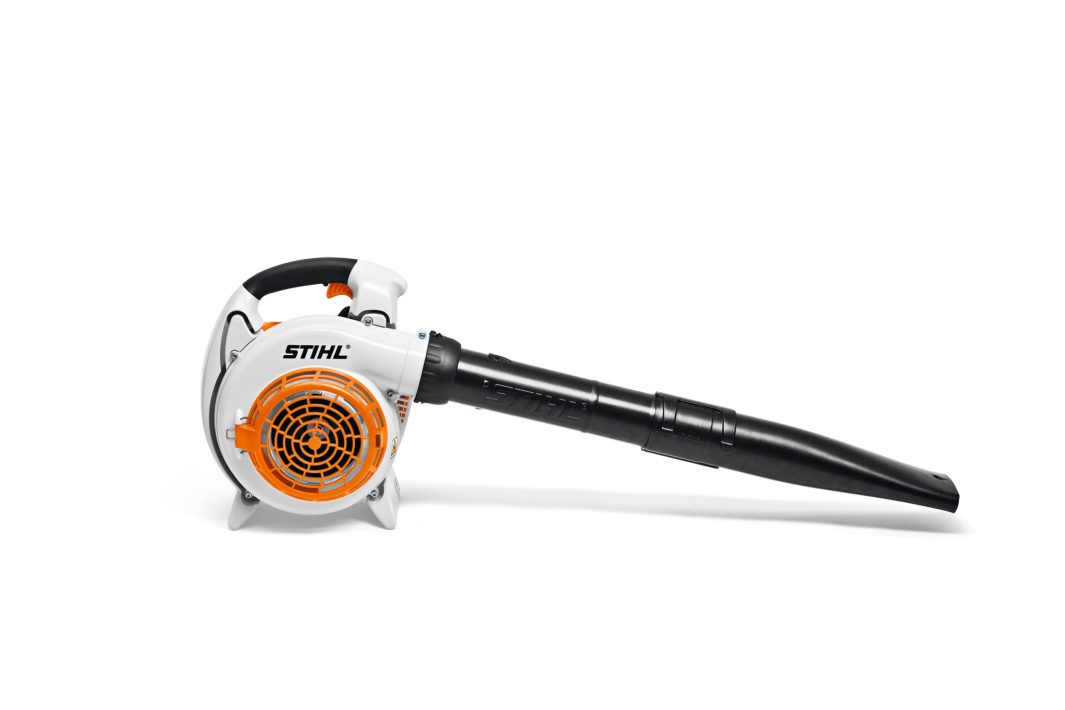
| In the box | Round and flat (fan) nozzles | STIHL dealers |
| Warranty | I couldn’t verify current US terms; ask the dealer. STIHL’s US manual carries emission-control warranty statements | STIHL manual |
Noise, vibration, and protective gear
| Spec | Value | Source |
|---|---|---|
| Sound power | 102 dB(A) measured, 104 dB(A) guaranteed (Directive 2000/14/EC, ISO 11094) | STIHL manual, EU declaration |
| Sound pressure | 70 dB(A) rating, listed at 15 m (about 50 ft) by one dealer. A UK dealer lists 90 dB(A) for the BG 86 C-E without stating the method | STIHL dealers |
| Handle vibration (right) | 2.5 m/s². The BG 56 lists 7.5 m/s² and the BG 66 lists 7.8 m/s² | STIHL manual |
| Hearing protection | Called for by the manual (earplugs or ear muffs) | STIHL manual |
| Eye protection | Snug-fitting safety glasses | STIHL manual |
Figures that vary by source or region
These are the numbers where sources disagree. I show each one instead of picking a winner. The manual I read is an English edition with an EU declaration, so US units may differ slightly.
| Spec | What sources say | Why it differs |
|---|---|---|
| Max air speed | Manual: 76 m/s (about 170 MPH) round. Dealers: 154 MPH round and 190 MPH flat. One dealer: 170 MPH round and 199 MPH flat | Average vs. maximum figures and different STIHL data sets. I can’t match the 199 MPH figure to a STIHL document |
| Air volume | 365 / 444 CFM (flat / round) at two dealers; 359 / 459 CFM at another (610 / 780 m³/h) | Rounding and unit conversion |
| Engine power | 1.07 bhp at one dealer, 1.10 bhp at another, 1.1 bhp in the manual | Rounding of 0.8 kW |
| Weight | Manual: 4.4–4.5 kg. Dealers: 9.7 lb (BG 86), 9.9 lb (C-E) | Weight depends on equipment |
| Noise | 70 dB(A) at 15 m (US dealers), 90 dB(A) sound pressure (a UK dealer, method not stated), 102 dB(A) sound power (manual) | Different quantities and test methods: sound pressure at a distance, sound pressure with an unstated method, and total sound power |
| Air filter | Dealers: washable HD2. Manual: flat filter “do not wash”; pleated filter may be washed | Different filter versions. Check the one fitted to your unit |
| Price | $299.99 and $329.99 for the BG 86; $349.99 for the C-E | Dealer pricing and date |
💨 Power and Airflow: What 15 N Really Means
Blowing force in newtons says more about how a blower handles a heavy pile than CFM or MPH alone. STIHL rates the BG 86 at 15 N. A dealer’s 21-model STIHL roundup lists it as the strongest gas handheld in the line, ahead of the BG 50 at 13 N. I found no independent bench test, so treat 15 N as a manufacturer rating, not a measured result.
For context, the same roundup lists STIHL’s BR 430 gas backpack at 26 N, so a handheld sits well below a backpack. The BGA 86 battery model carries the same 15 N rating. In my EGO LB5302 review, Pro Tool Reviews measured 16.5 N in turbo, though that is a bench measurement and not a rating, so the two aren’t strictly comparable.
Round nozzle vs. flat (fan) nozzle
The nozzles trade volume for speed. The round nozzle moves more air (444 CFM) at a lower average speed, while the fan nozzle is faster (74 m/s average, up to 190 MPH at maximum per dealers) at 365 CFM. STIHL’s manual says the round nozzle suits uneven surfaces such as fields and lawns, while the fan nozzle gives a broad, powerful airstream at ground level that works well on sawdust, leaves, and grass cuttings on flat surfaces. The manual adds that the fan nozzle can be aimed accurately.
What STIHL says it’s for
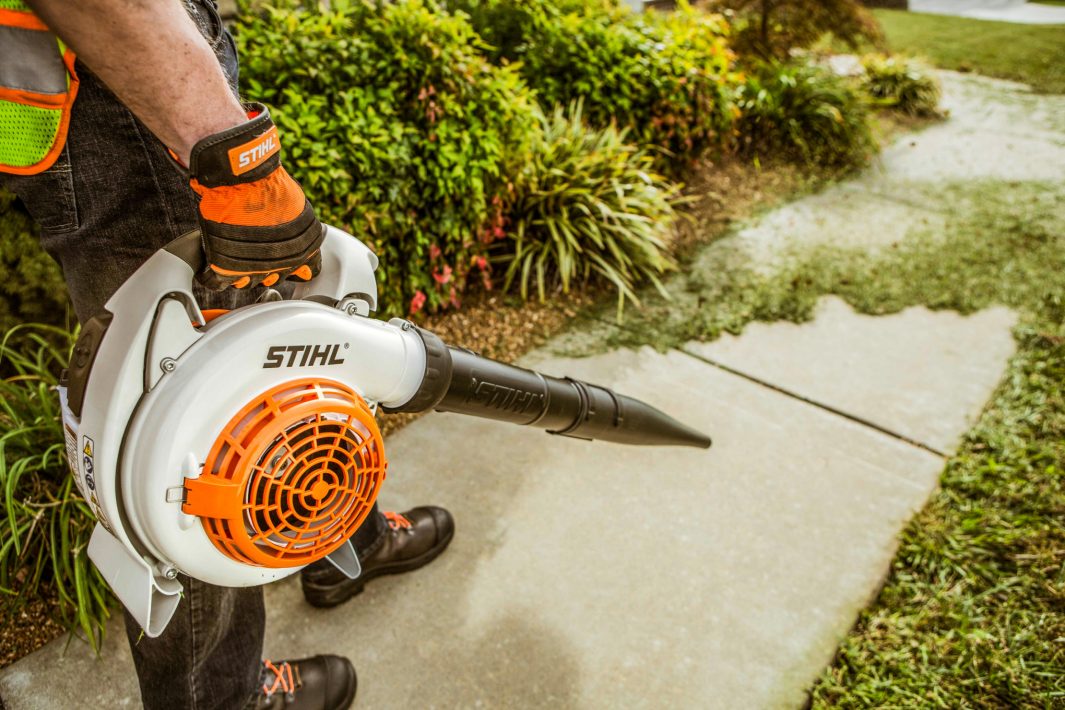
The manual lists blow-sweeping leaves, grass, paper, and similar materials in gardens, sports stadiums, car parks, and driveways, and also forest paths. It warns against blowing hazardous materials. If you’re comparing options, the current Amazon listing shows what’s bundled.
🔑 How to Start and Stop the BG 86
This is a summary of the starting procedure in STIHL’s manual for the BG 56, 66 and 86 family. Read the full manual for your exact version before first use.
- Start the engine outdoors, on level ground, at least 3 meters (about 10 ft) from where you fueled.
- Press the manual fuel pump bulb at least five times, even if it looks full.
- Move the setting lever to the run position. On the BG 86 this lever also lets you lock the throttle trigger at the speed you want.
- Set the choke: the cold-start position for a cold engine, or the warm position if the engine is warm or has run but is still cold.
- Hold the unit firmly on the ground with your right hand on the housing, pressing down, and the starter grip in your left hand. On versions without ErgoStart, pull slowly until the starter engages, then give a brisk, strong pull. On ErgoStart versions, pull steadily.
- Don’t pull the rope all the way out, and don’t let the grip snap back. Guide it back slowly.
- Once the engine runs, blip the throttle trigger. The choke returns to the run position and the engine drops to idle.
- To stop, move the setting lever to 0. It springs back to the on position afterward.
If the tank ran dry and you refueled, press the primer bulb at least five times before starting. If the engine stops in the cold-start position or during acceleration, move the choke lever to the warm position and keep cranking. Don’t drop-start the machine, and expect the airflow to throw small objects such as stones as soon as it starts.
⛽ Fuel, Mixing, and What You’re Buying Into
With no battery, the tank sets your runtime. It holds 440 cc (14.9 oz), and I found no published runtime for it, so I can’t say how long a tank lasts. Refilling takes seconds, which is the practical advantage over a battery blower on a big property.
| Fuel topic | What STIHL’s manual says |
|---|---|
| Gasoline | Brand-name gasoline, 90 octane minimum, leaded or unleaded |
| Oil ratio | 50:1, which is 50 parts gasoline to 1 part oil |
| Oil type | STIHL two-stroke oil, or another high-performance oil meeting JASO FB, FC or FD, or ISO-L-EGB, EGC or EGD |
| Ethanol | More than 10% ethanol can cause running problems in engines with a manually adjustable carburetor |
| Pre-mix option | STIHL MotoMix, where sold, keeps up to 2 years |
| Mixed fuel storage | Don’t store your own mix longer than 30 days; mix only enough for a few weeks |
| Mixing order | Pour the oil into the canister first, add gasoline, then mix thoroughly and shake before fueling |
Fueling habits from the manual: shut off the engine and let it cool before refueling, open the cap slowly to release pressure, fuel in a ventilated area, wipe up spills immediately, and tighten the screw-type cap as firmly as you can so vibration doesn’t loosen it. Clean the cap and the area around it before you open it, and change the fuel pickup body (the filter inside the tank) every year. STIHL recommends its filler nozzle, which is a separate accessory.
Cost and buying are the catch. STIHL sells through dealers, and the listings I found say pickup only. Some states and towns also restrict gas blowers, and two dealers won’t ship it to California, so check your local rules. To buy, check the Amazon listing for the seller and what’s included.
🛠️ Maintenance Schedule and Storage
STIHL’s manual gives a maintenance chart and notes that shorter intervals apply in dusty or demanding conditions. The table below is my plain-language summary of it, so check the chart in your manual for exact intervals.
| Item | What to do | When |
|---|---|---|
| Fuel system | Check for leaks at the tank cap, hose connections, and primer bulb. Don’t start the engine if you find a leak | Before each start |
| Throttle and setting lever | Trigger must move freely and spring back to idle; the lever must move easily to stop | Before each start |
| Spark plug boot | Make sure it’s secure. A loose boot can arc and ignite fumes | Before each start |
| Blower wheel and housing | Look for cracks, nicks, or chips. A worn housing raises the risk of thrown objects | Before each start |
| Air filter | Clean or replace. A dirty filter reduces power, raises fuel use, and makes starting harder | Per the manual’s chart; sooner in dusty work |
| Fuel pickup body | Replace | Every year |
| Spark plug | NGK CMR 6 H, gap 0.5 mm. Replace after about 100 operating hours, or sooner if the electrodes are badly eroded | About 100 hours |
| Spark arresting screen | Check and clean or replace (not on all versions) | As the manual specifies |
| Cooling air inlets and cylinder fins | Keep clean | Regularly |
| Anti-vibration elements | Check for condition; replacement is done by a dealer | At regular intervals |
| Screws and nuts | Retighten accessible ones (not the adjusting screws) | As needed |
| Muffler | Don’t run with a damaged or missing muffler. Carbonization is a dealer job | If problems |
| Carburetor | Factory standard setting suits most conditions. Idle speed adjustment is covered in the manual; leave other tuning to a dealer | If problems |
Air filter: two versions, two rules
The manual describes two filter types. A flat-material filter should be knocked out on your palm or blown out with compressed air, and replaced when needed, but not washed. A pleated filter can be washed in warm soapy water or STIHL’s special cleaner (a separate accessory), rinsed from the inside out, and dried away from high heat. Don’t use a pressure washer on the filter or the machine. Some dealers call the BG 86’s HD2 filter washable, so confirm which type your unit has.
Wear parts
STIHL lists filters (air and fuel), the blower wheel, the rewind starter, and the spark plug as parts that wear with normal use.
Storing it for 3 months or longer
- Drain and clean the fuel tank in a ventilated area, and dispose of the fuel properly
- Run the engine until the carburetor is dry, which helps prevent the diaphragms sticking together
- Clean the machine thoroughly, paying attention to the cylinder fins and air filter
- Store it in a dry, high or locked place out of children’s reach
🔧 Troubleshooting Common Problems
These come from STIHL’s manual. If the fix isn’t listed or the problem returns, take it to a servicing dealer, since STIHL recommends dealer repairs beyond the owner tasks it describes.
| Symptom | What the manual points to |
|---|---|
| Won’t start | Check the choke knob and setting lever positions, then repeat the starting procedure. Press the primer bulb at least five times, especially after running the tank dry |
| Hard to start, down on power, or poor idle | STIHL says to check the spark plug first, then the air filter |
| Fouled spark plug | The manual lists too much oil in the fuel mix, a dirty air filter, and unfavorable running conditions as causes |
| Engine stops at idle | The manual says to turn the idle speed screw clockwise until it runs smoothly. If it keeps happening, see a dealer |
| Stops when cold-starting or accelerating | Move the choke lever to the warm position and keep cranking |
| Poor running with a clean filter and good carburetor setting | The muffler may be carbonized. Have a dealer check it |
| Higher vibration or a change in running behavior | Stop work and find the cause. Check the anti-vibration elements and the blower wheel and housing |
⚖️ Weight, Noise, Safety, and Use by Job
Weight and handling
STIHL’s dealers list 9.7 lb without fuel, and the manual gives 4.4–4.5 kg depending on equipment. That’s noticeably heavier than cordless handhelds I’ve reviewed, such as the DEWALT DCBL722B at 5.43 lb without a battery. The manual says the blower is designed for one-handed use, carried by the control handle in your right hand. Walk forward slowly and watch the nozzle outlet rather than walking backward.
Noise
Dealers list a 70 dB(A) rating at 15 m (about 50 ft). STIHL’s manual lists 102 dB(A) measured sound power, which describes total sound output, not what reaches your ear. A UK dealer lists 90 dB(A) sound pressure for the C-E without stating the method. These can all be true at once, since they measure different things. Ear-level noise from a gas engine is typically higher than a rating taken at distance, and STIHL’s manual calls for hearing protection. Local rules may limit noise by time of day, so check your ordinance.
Vibration
STIHL’s manual lists 2.5 m/s² at the right handle for the BG 86, against 7.5 m/s² for the BG 56 and 7.8 m/s² for the BG 66. A UK dealer says the BG 86 has considerably lower vibration than the BG 56, which agrees with those figures. The manual still warns that prolonged use can cause vibration-related circulation problems in the hands, and advises keeping hands warm and taking breaks.
Safety rules in the manual
- Keep bystanders and animals at least 5 meters (about 16 ft) away, and don’t aim the airstream at people or pets
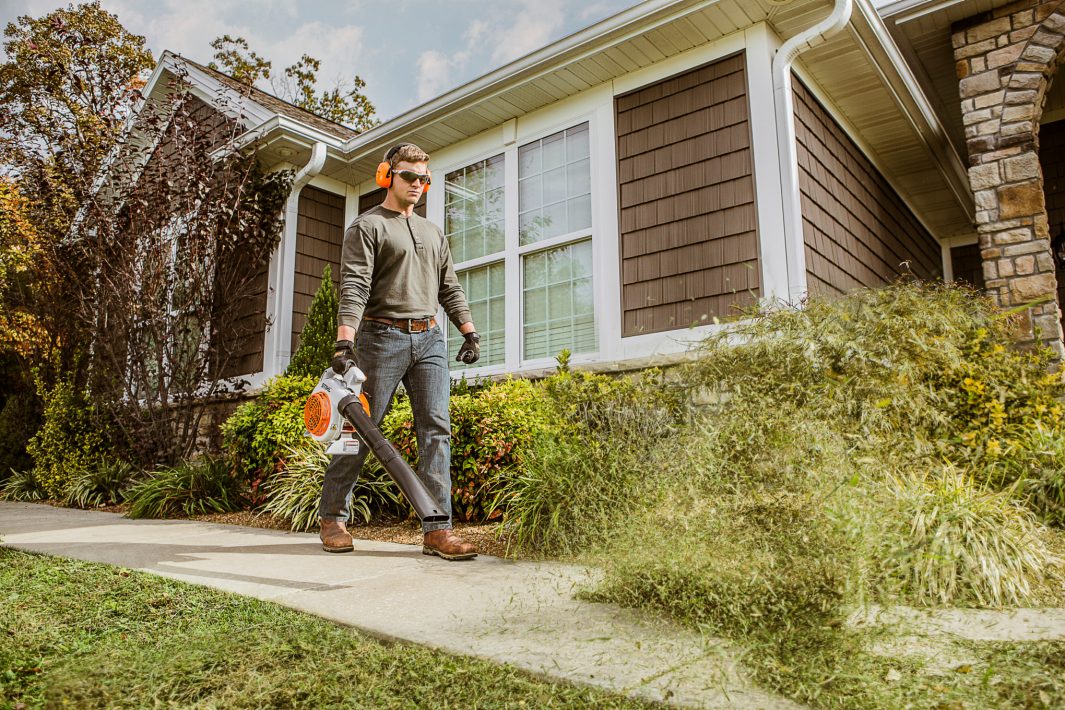
- Wear hearing protection, safety glasses, sturdy shoes, and snug clothing
- Never run the engine indoors or in poorly ventilated spaces, since exhaust is toxic
- Don’t put the hot machine down near dry grass, wood chips, or fuel
- Never push objects into the nozzle or intake screen
- Don’t operate with a damaged muffler, loose spark plug boot, or leaking fuel system
Working technique from the manual
STIHL suggests loosening debris with a rake or broom first, dampening very dusty surfaces, running the blower at the lowest speed that gets the job done, and not blowing debris onto a neighbor’s land. Work at reasonable hours, not early, late, or during midday rest periods.
What the numbers suggest, by job
These are reasoned from the specs and the manual, not from my own testing.
- Small yard: more machine than you need, and a cordless blower would be lighter and quieter.
- Half acre and up: a good fit, since you refuel instead of waiting on batteries.
- Wet or matted leaves: 15 N is solid for a handheld, but heavy, matted debris may call for a backpack blower.
- Lawns and uneven ground: the manual points to the round nozzle.
- Driveways, car parks, and flat hard surfaces: the manual points to the fan nozzle for leaves, sawdust, and grass cuttings.
- Pine needles and light debris: the round nozzle’s higher airflow should handle it, which is my inference.
⚔️ How the BG 86 Compares
BG 86 vs. BG 56 vs. BG 66
These figures come from STIHL’s shared manual for the family, using round-nozzle values. The BG 86 leads on force, air speed, and airflow, and its handle vibration figure is far lower.
| Model | Blowing force | Engine | Tank | Air speed / flow (round) | Dry weight | Right-handle vibration |
|---|---|---|---|---|---|---|
| STIHL BG 56 | 13 N | 0.7 kW (1.0 bhp) | 540 cc | 60 m/s / 700 m³/h | 4.1–4.2 kg | 7.5 m/s² |
| STIHL BG 66 | 10 N | 0.6 kW (0.8 bhp) | 540 cc (440 cc for the C) | 51 m/s / 630 m³/h | 4.4 kg (4.7 kg for the C) | 7.8 m/s² |
| STIHL BG 86 (this review) | 15 N | 0.8 kW (1.1 bhp) | 440 cc | 63 m/s / 755 m³/h | 4.4–4.5 kg | 2.5 m/s² |
BG 86 vs. BG 86 C-E vs. BGA 86
The BG 86 C-E is the same blower family with STIHL’s Easy2Start system, a specialized stop switch that returns to the start position, and a semi-automatic choke; dealers list it at 9.9 lb. The BGA 86 is the battery version. STIHL’s manuals list 90 dB(A) sound power for the BGA 86 against 102 dB(A) for the BG 86, and dealers rate it 58 dB(A) against 70 dB(A). The tests use different standards, but both point the same way, toward the battery model being quieter.
Against other brands and platforms
STIHL’s figures below are manufacturer ratings summarized by a dealer, while the EGO figure is an independent bench measurement. Treat the ranking as a rough guide, not a like-for-like contest.
| Blower | Force | Best for | Trade-off vs. the BG 86 |
|---|---|---|---|
| STIHL BG 86 (this review) | 15 N rated | Gas power, no runtime limit | Fuel, noise, 9.7 lb dry |
| STIHL BGA 86 | 15 N rated | Cordless with the same force rating and 459 CFM; 6.2 lb without battery | Up to 21 min on an AP 300 battery, per a dealer |
| STIHL BG 50 | 13 N rated | Lower-cost gas handheld | Less force |
| STIHL BR 430 | 26 N rated | Gas backpack, heavy debris | Larger and heavier; I couldn’t verify its price |
| EGO LB5302 kit | 16.5 N measured | Boxed cordless kit; see our review | About 22 min on high with the kit battery |
| DEWALT DCBL722B | Not published | Cordless for DEWALT 20V MAX owners; see our review | Tool only; no force figure |
Blowing force (newtons): STIHL ratings vs. one bench measurement
If you want the same force with a battery, the BGA 86 is the closest match, and it trades the fuel can for limited runtime. For a boxed cordless kit, see our EGO LB5302 review. If you own DEWALT 20V MAX batteries, see our DEWALT DCBL722B review.
⭐ Owner Feedback, Pros and Cons
I couldn’t find a sizable pool of owner reviews for the BG 86, and the UK retailer pages I saw had none posted, so I’m not summarizing patterns I haven’t seen. The points below are my analysis of the specs and manual above:
- 15 N rating, the top figure among STIHL gas handhelds
- No battery: refuel and keep working
- Round and fan nozzles included
- Low listed handle vibration (2.5 m/s²) with a four-spring system
- Throttle lock with built-in stop switch
- Primer bulb and choke knob for dependable starting
- Parts and service through STIHL dealers
- Basic upkeep, such as the air filter and spark plug, is covered in the manual
- Gas engine: mixed fuel, noise and exhaust
- 9.7 lb dry, heavy next to cordless handhelds
- Pickup-only at dealers I found, and not shipped to California
- No independent force test found
- No published tank runtime
- Two-stroke upkeep: fuel mix, plug changes, filter care
- Some towns restrict gas blowers
- US warranty terms not verified
🎯 Who Should Buy It
Buy it if:
- You want a handheld with no battery or charging to manage
- You clear a large property or work long shifts and can refuel on site
- You’re comfortable mixing fuel and maintaining a two-stroke engine
- You want lower handle vibration than the BG 56
Skip it if:
- You want cordless and quiet. Look at the STIHL BGA 86 or one of our cordless reviews
- You need backpack-level force. STIHL lists the BR 430 at 26 N
- You live where gas blowers are restricted or can’t get one shipped
- You don’t want to handle fuel mixing and engine upkeep
❓ STIHL BG 86 FAQ
Is the STIHL BG 86 worth buying?
It’s worth it for professionals and owners of large properties who want a gas handheld with no battery limits. STIHL rates it at 15 N, the top figure among its gas handhelds. If you want quiet, low weight, or a battery, the BGA 86 or a cordless blower fits better.
Is the STIHL BG 86 cordless?
No. The BG 86 is a gas handheld with a 27.2 cc two-stroke engine. STIHL’s cordless equivalent is the BGA 86, which carries the same 15 N rating.
What fuel does the BG 86 use?
A 50:1 mix of gasoline (90 octane minimum) and two-stroke oil, according to STIHL’s manual. STIHL warns that the wrong fuel or mix ratio can damage the engine.
Can I use ethanol gasoline in the BG 86?
STIHL’s manual warns that gasoline with more than 10% ethanol can cause running problems in engines with a manually adjustable carburetor. Check which carburetor your unit has and follow the manual.
How long can I store mixed fuel?
STIHL says not to keep your own mix longer than 30 days. Its MotoMix pre-mix, where sold, can be stored up to 2 years.
How powerful is the BG 86?
STIHL rates it at 15 N of blowing force, with up to 190 MPH at the flat nozzle and up to 444 CFM at the round nozzle, per dealers. I found no independent measurement.
How loud is it?
Dealers list 70 dB(A) at 15 m (about 50 ft), and a UK dealer lists 90 dB(A) sound pressure without stating the method. STIHL’s manual lists 102 dB(A) measured sound power. Ear-level noise is typically higher than the distance rating, so wear hearing protection and check local rules.
How much does it weigh?
About 9.7 lb (4.4 kg) without fuel per dealers, and 4.4–4.5 kg depending on equipment per STIHL’s manual. The BG 86 C-E is listed at 9.9 lb.
Which spark plug does it use, and when should I change it?
STIHL’s manual lists an NGK CMR 6 H resistor plug with a 0.5 mm gap, and says to fit a new one after about 100 operating hours, or sooner if the electrodes are badly eroded.
Can I wash the air filter?
It depends on the filter version. STIHL’s manual says a flat filter should be cleaned by knocking it out or using compressed air and not washed, while a pleated filter may be washed in warm soapy water. Dealers call the BG 86’s HD2 filter washable, so confirm which type you have.
What’s the difference between the BG 86 and the BG 56?
The BG 86 is rated at 15 N against 13 N for the BG 56, with higher air speed and airflow and a 2.5 m/s² right-handle vibration figure against 7.5 m/s², per STIHL’s manual.
What’s the difference between the BG 86 and the BGA 86?
The BG 86 runs on gas and weighs 9.7 lb dry. The BGA 86 is the battery model at 6.2 lb without a battery, with the same 15 N rating and, per a dealer, up to 21 minutes on an AP 300 battery.
What’s the difference between the BG 86 and the BG 86 C-E?
The C-E adds STIHL’s Easy2Start system and is listed at 9.9 lb, per dealers. Check which one your listing is.
Does the BG 86 work as a vacuum?
STIHL sells the SH 86 as the vacuum-shredder version. One Irish retailer lists a vacuum adaptor kit for the BG 86, but I couldn’t confirm that for the US, so ask your dealer.
Can I buy it online and have it shipped?
It depends on the seller. STIHL dealer pages I found list it as pickup-only, and two dealers say it doesn’t ship to California. Check the Amazon listing’s seller before ordering.
🏆 Final Verdict: Is the STIHL BG 86 Worth It?
The STIHL BG 86 is a strong professional gas handheld. It’s rated at 15 N, comes with two nozzles, and has a low vibration figure and the controls that make long shifts easier. What holds it back is everything that comes with gas: mixed fuel, engine noise, weight, two-stroke upkeep, and dealer-only sales.
If you want unlimited runtime on a big property and you’re comfortable with a two-stroke, it fits well. If you want a battery, the BGA 86 carries the same force rating, and our cordless reviews cover the alternatives. If it fits how you work, you can check the latest price, what’s included, and the seller on Amazon.
📸 STIHL BG 86 Photos
Click to see full view
📚 More Blower Reviews
EGO LB5302 56V 530 CFM Leaf Blower: Specs, Pros & Cons
A boxed cordless kit with a battery and charger, and measured force.
DEWALT DCBL722B 20V MAX XR Blower: Specs, Pros & Cons
A light cordless handheld for DEWALT 20V MAX owners.
EGO Commercial LBX6000 56V Backpack Blower: Specs & Pros
A commercial handheld that runs from a backpack battery.
✅ Before You Buy: Quick Checklist
A few details vary by seller, so it’s worth a minute on the listing to confirm:
- The model: BG 86 or BG 86 C-E, which differ in starter and weight
- The seller: an authorized STIHL dealer, since STIHL limits sales to dealers
- Shipping: whether it ships to your state, since California is excluded by dealers I found
- Fuel and oil: you’ll need 90 octane gasoline and 50:1 two-stroke oil
- Protective gear: hearing protection and safety glasses
Affiliate Disclosure: BestLeafBlowerCordless.com is a participant in the Amazon Services LLC Associates Program, an affiliate advertising program designed to provide a means for sites to earn advertising fees by advertising and linking to Amazon.com. As an Amazon Associate, we earn from qualifying purchases.